


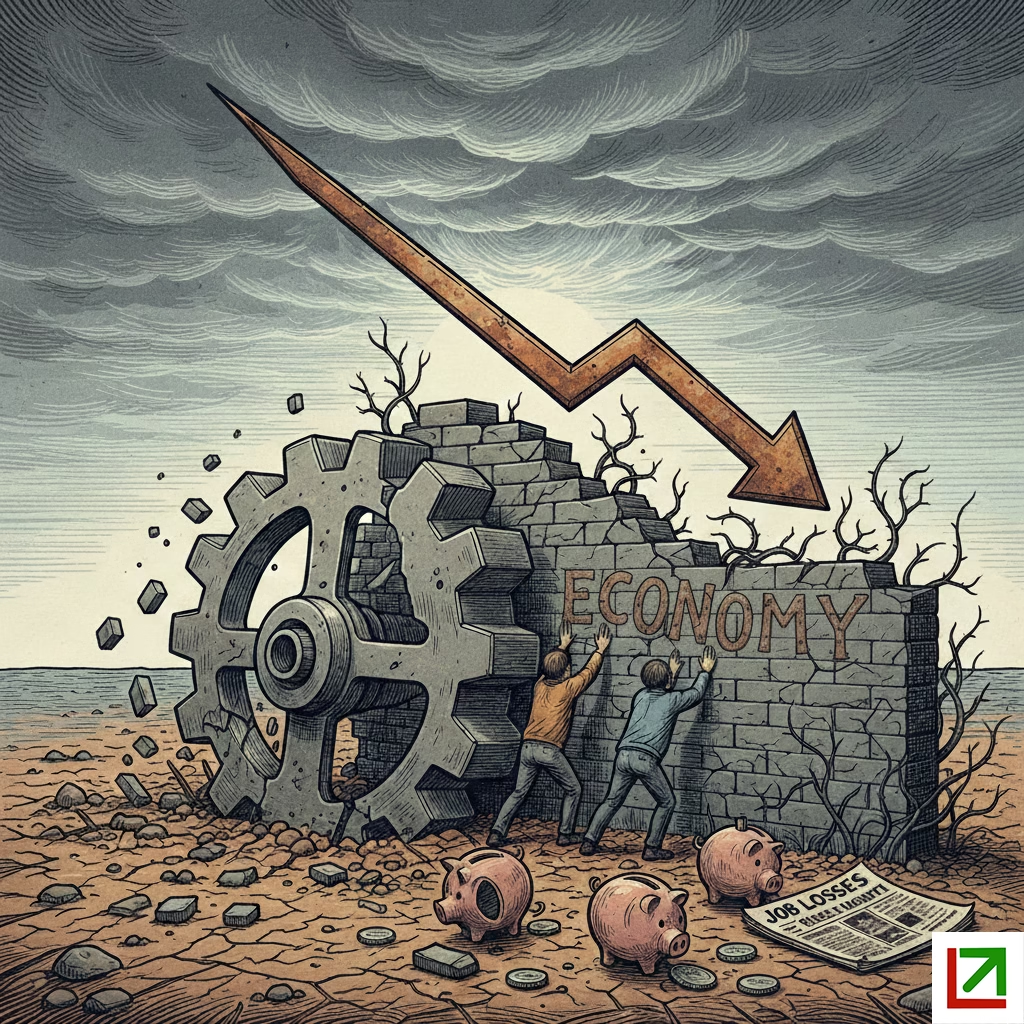
Recession Explained: Meaning, Causes, Examples & Impact
A recession is one of the most talked-about , and feared, economic terms. Headlines about slowing growth, job losses, and market crashes often raise one big question: Are we heading into a recession?
While recessions are a normal part of the economic cycle, their effects can be serious for individuals, businesses, and governments. Understanding what a recession is, why it happens, how long it lasts, and how it affects everyday life can help you prepare rather than panic.
This guide explains recessions in simple language, with real-world examples and practical insights.
What Is a Recession?
A recession is a significant, widespread, and prolonged decline in economic activity. In simple terms, it’s when an economy slows down for an extended period instead of growing.
The most common definition of a recession is:
Two consecutive quarters of negative economic growth, usually measured by Gross Domestic Product (GDP).
However, economists and institutions like the National Bureau of Economic Research (NBER) use a broader approach. They also look at:
- Employment levels
- Industrial production
- Consumer spending
- Business investment
- Income growth
A recession is not just about shrinking GDP, it reflects a broad slowdown across the economy.
Key Takeaways About Recessions
- Recessions are measured from the peak of economic growth to the lowest point (trough).
- They can last a few months or several years.
- Stock markets often fall before a recession is officially declared.
- Unemployment usually stays high even after the economy starts recovering.
- Governments use fiscal and monetary policies to reduce the damage caused by recessions.
- Not every economic slowdown becomes a recession.
How Recessions Work
Most modern economies grow over time, but growth is not constant. Periods of expansion are often followed by slowdowns.
During a recession:
- Consumers spend less
- Businesses earn less revenue
- Companies reduce production and hiring
- Layoffs increase
- Investment slows
This creates a self-reinforcing cycle:
- Consumers cut spending
- Businesses lose revenue
- Layoffs increase
- Household incomes fall
- Spending drops further
At the same time, falling stock markets reduce household wealth, which further discourages spending, a phenomenon known as the wealth effect.
How Economists Identify a Recession
In the United States, the NBER officially declares recessions. It does not rely on a single rule. Instead, it analyzes multiple indicators such as:
- Non-farm payroll employment
- Industrial production
- Retail sales
- Real personal income
Because some data becomes clear only later, many recessions are identified after they have already begun or ended.
This is why people often disagree in real time about whether the economy is in a recession.
What Predicts a Recession?
There is no perfect predictor, but several indicators have historically signaled rising recession risk.
1. Inverted Yield Curve
An inverted yield curve occurs when:
- Short-term interest rates are higher than long-term rates
This suggests investors expect economic weakness and future rate cuts. Historically, every U.S. recession since 1955 was preceded by an inverted yield curve, though not every inversion led to a recession.
2. Rising Unemployment
An increase in unemployment often signals that businesses are cutting costs and demand is weakening.
3. Declining Consumer Confidence
When people feel uncertain about the future, they spend less- which can slow the economy further.
4. Falling Industrial Production
Reduced manufacturing output often reflects weaker demand and slowing business activity.
5. Financial Market Volatility
Sharp stock market declines and rising volatility may indicate stress in the broader economy.
What Causes Recessions?
Recessions can be caused by one major shock or a combination of factors. Economists generally group causes into economic, financial, and psychological factors.
1. Asset Bubbles
When asset prices rise too fast, such as stocks or real estate, a bubble can form. Once it bursts, it can trigger a recession.
Examples:
- Dot-com bubble (early 2000s)
- Housing bubble (2007–2008)
2. Overheated Economic Growth
When an economy grows too quickly:
- Inflation rises
- Costs increase
- Profit margins shrink
Businesses may respond with layoffs and spending cuts, leading to a downturn.
3. Financial Crises
Banking collapses or credit freezes reduce lending, which slows investment and consumption.
4. High Interest Rates
Central banks may raise interest rates to fight inflation. If rates rise too much, borrowing becomes expensive and economic activity slows.
5. External Shocks
Unexpected events such as:
- Wars
- Pandemics
- Global financial crises
- Energy price shocks
can disrupt supply chains and demand.
6. Political and Policy Mistakes
Poor fiscal or monetary decisions, excessive austerity, or political instability can weaken economic confidence.
Recessions vs. Depressions
A depression is an extremely severe and long-lasting recession.
There is no official definition, but many economists consider a depression when:
- GDP declines by more than 10%
- Unemployment remains very high for years
The Great Depression Example
- U.S. GDP fell by ~30%
- Stock market lost ~80%
- Unemployment reached ~25%
Most modern recessions are far milder due to government intervention.
History of Recessions in the U.S.
- The U.S. has experienced 34 recessions since 1854
- Average duration: 17 months
- Since 1980, recessions have been shorter and less frequent
Major Recessions:
- Great Depression (1929–1941)
- Oil shock recessions (1970s)
- Early 1980s double-dip recession
- Global Financial Crisis (2007–2009)
- Pandemic recession (2020)
Recent Recessions
The 2020 Pandemic Recession
- One of the shortest recessions on record
- Extremely deep and widespread
- Massive government stimulus helped speed recovery
2022 Recession Debate
Despite two quarters of GDP contraction, strong employment growth led many economists to argue the U.S. was not officially in recession.
What Happens During a Recession?
Economic Effects
- GDP declines
- Business profits fall
- Investment slows
- Trade volumes shrink
Labor Market
- Unemployment rises
- Wage growth slows
- Job security weakens
Financial Markets
- Stock prices fall
- Volatility increases
- Investors seek safe assets
Government Finances
- Tax revenues decline
- Budget deficits widen
- Social spending increases
How a Recession Affects You
A recession impacts people differently, but common effects include:
1. Job Instability
Layoffs and hiring freezes make employment less secure.
2. Income Pressure
Bonuses disappear, raises slow, and working hours may be reduced.
3. Higher Financial Stress
Meeting expenses becomes harder, especially without savings.
4. Reduced Access to Credit
Banks tighten lending standards.
5. Investment Losses
Stock portfolios and retirement accounts may decline in value.
6. Mental Health Strain
Financial uncertainty can increase anxiety and stress.
Signs a Recession May Be Coming
- Falling GDP growth
- Rising unemployment claims
- Inverted yield curve
- Weak retail sales
- Declining business confidence
- Stock market volatility
No single indicator is conclusive, context matters.
How Long Do Recessions Last?
- Average U.S. recession: 17 months
- Since 1980: less than 10 months on average
- Economic recovery often starts before people feel better financially
Unemployment typically lags behind recovery.
Can You Prepare for a Recession?
You can’t prevent a recession, but you can reduce its impact on your life.
Practical Steps:
- Build an emergency fund (3–6 months of expenses)
- Control debt and avoid unnecessary borrowing
- Improve skills to stay competitive in the job market
- Diversify investments
- Stay informed, not alarmed
- Think long-term, especially with investments
Avoid panic decisions, recessions eventually end.
The Bottom Line
A recession is a normal but painful phase of the economic cycle. While it brings challenges like job losses, lower incomes, and market volatility, it also reshapes economies and often leads to future growth.
Understanding how recessions work helps you:
- Make better financial decisions
- Protect your income and savings
- Stay calm during uncertainty
Economic cycles repeat, and history shows that recoveries always follow recessions.
Being informed is your best financial defense.
Other topics you might be interested in:
What Is the Federal Reserve? Meaning, Role and Why It Matters
What Is Inflation? Meaning, Causes and How It Affects Consumers
Economic Data Explained: How Macro Numbers Shape Financial Markets
What Is Consumer Price Index (CPI)? Meaning, Calculation, and Why It Matters