


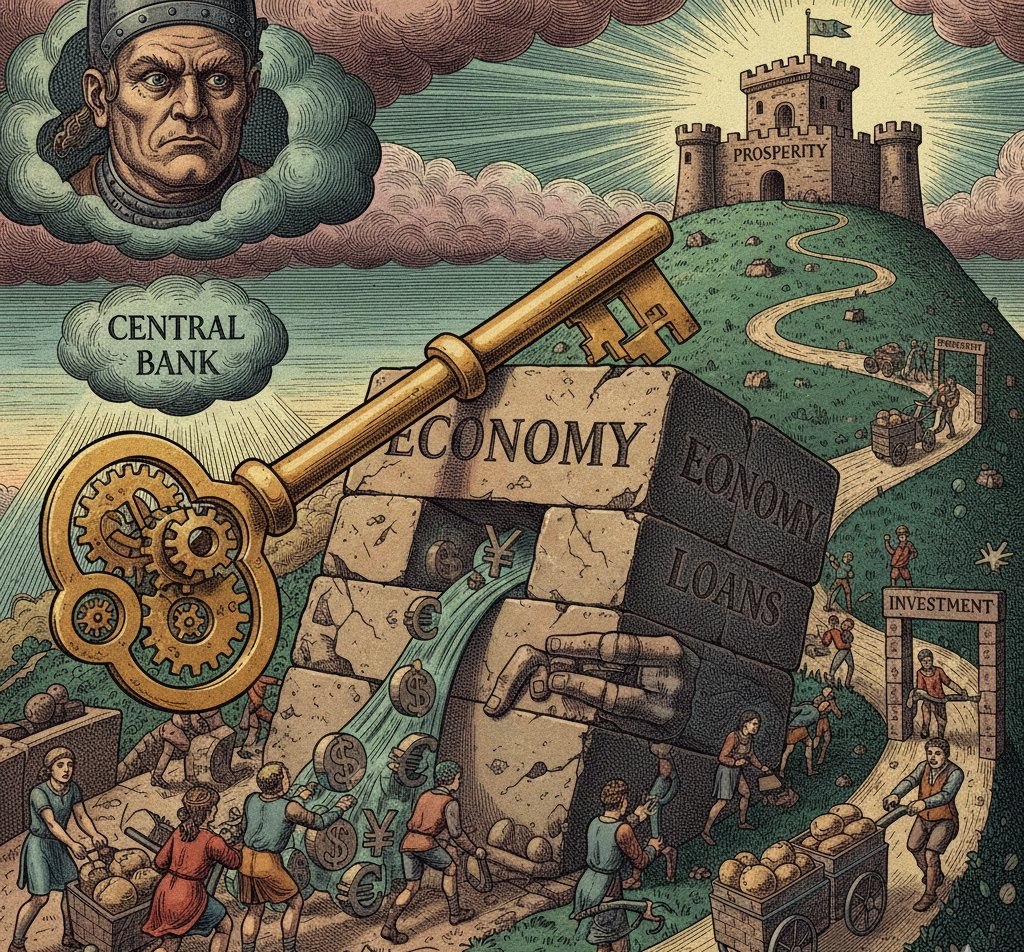
Interest rates affect almost every part of our financial lives, from home loans and credit cards to savings accounts and investments. Even small changes in interest rates can have a powerful impact on households, businesses, and the overall economy. That is why interest rates are closely watched by governments, central banks, investors, and everyday consumers.
In simple terms, interest rates determine how much it costs to borrow money and how much you earn when you save money. But their influence goes far beyond individual loans or savings accounts. Interest rates shape spending habits, business growth, inflation, employment, stock markets, and long-term economic stability.
This article explains what interest rates are, how they work, who sets them, and why they matter so much, using clear language and real-world examples.
What Are Interest Rates?
An interest rate is the percentage charged on borrowed money or earned on saved money.
- If you borrow money, the interest rate is the cost you pay for using that money.
- If you save money, the interest rate is the reward you earn for depositing your money with a bank or financial institution.
The higher the interest rate:
- Borrowers pay more
- Savers earn more
The lower the interest rate:
- Borrowers pay less
- Savers earn less
Interest rates are usually quoted on an annual basis.
Interest Rates for Borrowers
When you take a loan such as a mortgage, auto loan, student loan, or credit card, the interest rate determines how much extra money you must repay on top of the original amount borrowed (called the principle).
Example:
If you borrow $10,000 at an interest rate of 5% per year:
- You will owe $500 in interest for one year
- Total repayment after one year = $10,500
Borrowing becomes more expensive as interest rates rise. This often leads people to delay major purchases like homes or cars.
Interest Rates for Savers
When you deposit money into a savings account, certificate of deposit (CD), or similar product, the bank pays you interest.
Example:
If you deposit $10,000 in a savings account paying 5% interest:
- You earn $500 in interest after one year
- Your balance becomes $10,500
Higher savings rates benefit people who save money, while lower rates reduce returns on deposits.
Why Even Small Changes in Interest Rates Matter
A change of just 0.25% or 0.50% may seem minor, but it can significantly affect:
- Monthly mortgage payments
- Credit card interest charges
- Business borrowing costs
- Investment returns
- Inflation and economic growth
Because interest rates apply to trillions of dollars across the economy, small adjustments can have large ripple effects.
Why Do Interest Rates Matter to the Economy?
Interest rates influence how much people spend, save, and invest.
When Interest Rates Are Low:
- Borrowing is cheaper
- Consumers are more likely to buy homes, cars, and appliances
- Businesses are more willing to invest and hire
- Economic growth usually increases
When Interest Rates Are High:
- Borrowing becomes expensive
- Consumer spending slows
- Businesses delay expansion
- Inflation may cool
- Economic growth slows
Central banks use interest rates as a tool to balance economic growth and inflation.
Who Sets Interest Rates?
In the United States, the Federal Reserve (the Fed) plays a central role in influencing interest rates.
The Fed does not directly set mortgage or credit card rates. Instead, it sets:
- The federal funds rate (the rate banks charge each other for short-term loans)
- The discount rate (the rate banks pay when borrowing from the Fed)
Banks then use these benchmark rates to set their own lending and savings rates.
The Federal Reserve’s Mandate
The Fed operates under a mandate from Congress to:
- Promote maximum employment
- Maintain stable prices (control inflation)
- Support moderate long-term interest rates
By raising or lowering interest rates, the Fed attempts to keep the economy balanced.
How Interest Rates Help Control Inflation
Inflation occurs when prices rise too quickly, reducing purchasing power.
When Inflation Is High:
- The Fed raises interest rates
- Borrowing becomes more expensive
- Spending slows
- Demand decreases
- Price pressures ease
When Inflation Is Low or Growth Slows:
- The Fed lowers interest rates
- Borrowing becomes cheaper
- Spending increases
- Businesses invest more
- Employment improves
This is why interest rates are one of the Fed’s most powerful tools.
Simple Interest vs. Compound Interest
Simple Interest
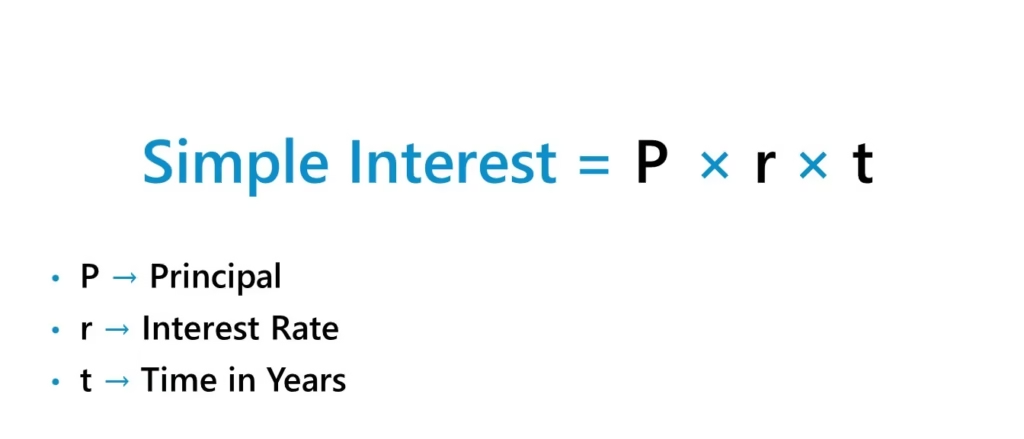
Simple interest is calculated only on the original loan amount.
Formula:

Example:
A $300,000 loan at 4% simple interest for one year:
- Interest = $12,000
- Total = $312,000
Over 30 years:
- Interest paid = $360,000
Compound Interest
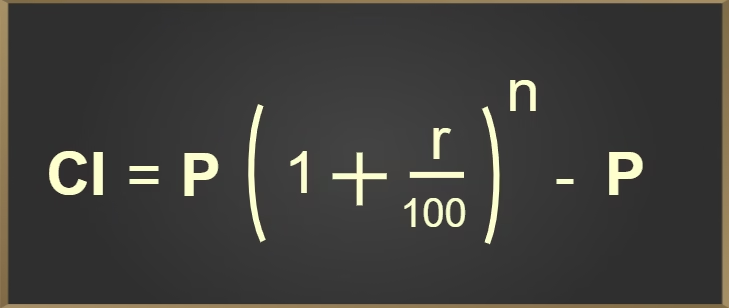
Compound interest is calculated on:
- The principal
- Plus previously earned interest
This results in higher total interest over time.
Formula:

Example:
A $300,000 loan at 4% compounded over 30 years:
- Total interest ≈ $673,019
This shows why compound interest benefits savers but increases borrowing costs.
Interest Rates and Savings Accounts
Savings accounts and CDs usually earn compound interest, which works in favor of savers.
Banks use deposited funds to issue loans and pay depositors a portion of the interest earned.
Example:
- Bank charges borrowers 8%
- Bank pays savers 5%
- Bank earns the difference
This system connects savers and borrowers through interest rates.
APR vs. APY: What’s the Difference?
APR (Annual Percentage Rate)
- Applies to loans
- Does not include compounding
- Used for mortgages, credit cards, and personal loans
APY (Annual Percentage Yield)
- Applies to savings
- Includes compounding
- Shows the true return on deposits
Understanding this difference helps compare financial products accurately.
Fixed vs. Variable Interest Rates
Fixed Interest Rates
- Stay the same throughout the loan
- Predictable monthly payments
- Common for mortgages and auto loans
Variable Interest Rates
- Change with market conditions
- Payments can increase or decrease
- Common for credit cards and HELOCs
Variable rates can be beneficial when rates fall but risky when rates rise.
Common Types of Loans and Their Interest Rates
- Mortgages: Mostly fixed; some adjustable-rate mortgages (ARMs)
- Auto Loans: Usually fixed
- Credit Cards: Typically variable
- Student Loans: Mostly fixed, private loans may be variable
Each loan type responds differently to changes in interest rates.
How Banks Decide Your Interest Rate
Banks consider several factors:
- The Fed’s benchmark rates
- Inflation and economic conditions
- Supply and demand for credit
- Your credit score and financial history
Borrowers with strong credit profiles usually receive lower interest rates.
Interest Rates and Bonds
Interest rates and bond prices move in opposite directions.
- When rates rise → bond prices fall
- When rates fall → bond prices rise
Long-term bonds are more sensitive to interest rate changes than short-term bonds.
Interest Rates and Stocks
Interest rates do not directly control stock prices, but they influence them.
Higher rates can:
- Increase borrowing costs for companies
- Reduce profits
- Slow expansion and hiring
- Put pressure on stock prices
Lower rates can:
- Encourage investment
- Support higher stock valuations
A balanced portfolio helps manage these risks.
Interest Rates and Savings, Real Estate, and Commodities
- Savings & CDs: Benefit from higher rates
- Real Estate: Higher rates increase mortgage costs and may lower prices
- Commodities: Often face pressure when rates rise
Interest rates shape investment decisions across asset classes.
Interest Rates and Inequality
Data shows differences in mortgage approval and interest rates across racial groups. While some studies point to discrimination, others suggest cost-tradeoffs and borrower choices play a role. Increased automation and stronger enforcement of fair-lending laws aim to reduce disparities over time.
Final Thoughts: Why Interest Rates Matter to You
Interest rates affect:
- Your monthly loan payments
- Your savings growth
- Your investment returns
- Job opportunities
- Inflation and cost of living
Understanding how interest rates work helps you:
- Make smarter borrowing decisions
- Choose better savings products
- Adjust investment strategies
- Plan for economic changes
Whether rates are rising, falling, or staying the same, keeping an eye on interest rates is essential for making informed financial decisions.
Other topics you might be interested in:
What Is the Federal Reserve? Meaning, Role and Why It Matters
What Is Inflation? Meaning, Causes and How It Affects Consumers