


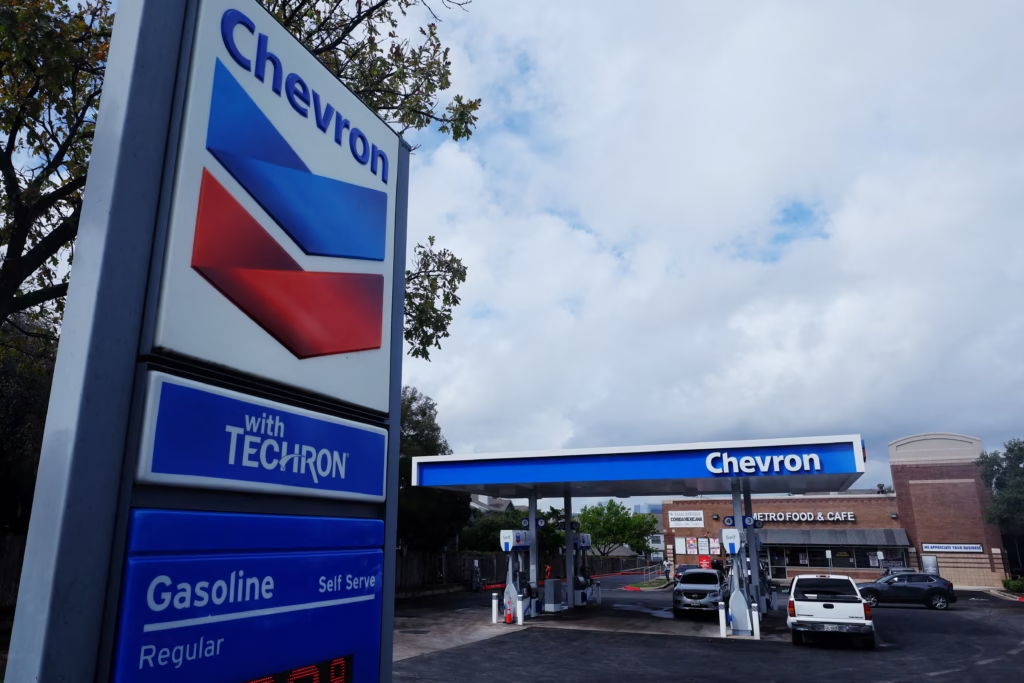
The reported capture of Venezuelan President Nicolás Maduro by U.S. forces has sent shockwaves through global markets. It marks a dramatic turning point in Venezuela’s long-running political crisis and raises big questions about oil, debt, and foreign investment. However, despite the headline-grabbing nature of the event, the immediate impact on Chevron stock (CVX) is likely to be limited.
Chevron has long maintained a unique and carefully managed presence in Venezuela, even as other major oil companies exited years ago. While political change could unlock major opportunities over time, investors should not expect instant gains for Chevron or a rapid economic turnaround for Venezuela.
Chevron’s Special Position in Venezuela
Chevron stands alone as the only major U.S. oil company still operating in Venezuela. This is not by chance. Over decades, Chevron has navigated nationalizations, sanctions, currency controls, and political instability while competitors were forced out.
- Exxon Mobil’s assets were taken over by the Venezuelan state in the mid-2000s
- ConocoPhillips exited the country and later sued Venezuela for billions of dollars
- Most international energy firms cut ties as the country’s economy collapsed
Chevron, by contrast, stayed — but under strict limits. Its operations have been allowed mainly through temporary licenses issued by the U.S. government, meaning its activities are tightly controlled and politically sensitive.
Why Chevron Stock May Not Move Much Right Now
Despite the dramatic nature of Maduro’s capture, Chevron stock is unlikely to see major short-term movement for several reasons:
- Venezuela is a small part of Chevron’s business
Chevron operates across the U.S., Middle East, Africa, Asia, and Australia. Venezuela contributes only a modest share of its overall production and revenue. - Operations remain restricted
Even with Maduro gone, sanctions, legal frameworks, and political uncertainty remain. Chevron cannot suddenly ramp up production overnight. - Markets already expected change
Investors have been anticipating political pressure on Maduro for months. Much of the optimism is already reflected in asset prices.
That said, Chevron could benefit significantly in the long term if Venezuela stabilizes and opens its oil sector more fully to foreign companies.
Venezuela’s Oil Reserves: A Long-Term Opportunity
Venezuela holds some of the largest proven oil reserves in the world, but years of mismanagement and lack of investment have crippled production. Infrastructure is outdated, refineries are damaged, and skilled workers have fled the country.
If a new government emerges that works closely with the U.S. and international partners, Chevron could play a key role in rebuilding output. This aligns with former President Donald Trump’s stated goal of restoring Venezuela’s oil industry under U.S. oversight during a transition period.
However, rebuilding will take years, not months. Capital, technical expertise, and political stability are all required — none of which can be guaranteed immediately.
Venezuelan Bonds Surge on Hopes of Regime Change
While Chevron stock remains relatively stable, Venezuelan bonds have rallied sharply. Investors holding defaulted government and state oil company (PDVSA) debt are betting that political change could finally lead to repayment.
Key developments include:
- Defaulted Venezuelan bonds have risen from near-zero levels to 23–33 cents on the dollar
- Some investors believe recovery values could eventually reach 50–60 cents
- Total debt obligations exceed $150 billion, including bonds, loans, and legal claims
The optimism is driven by the belief that a U.S.-backed transition could lead to debt restructuring and renewed access to global capital markets.
Why Debt Restructuring Will Be Slow
Despite the recent rally, Venezuela’s debt situation remains extremely complex. The country defaulted in 2017 and has since accumulated lawsuits, unpaid loans, and frozen assets across multiple jurisdictions.
Debt experts warn that:
- Any restructuring would likely wait until a permanent government is in place
- Legal disputes could take years to resolve
- Creditors range from hedge funds to foreign governments
In simple terms, while hopes are rising, actual repayment is still far away.
The Role of the U.S. in Venezuela’s Transition
According to U.S. officials, Washington plans to oversee Venezuela temporarily while a leadership transition is organized. The focus will reportedly be on restoring oil infrastructure and stabilizing the economy.
Markets reacted positively to signs that senior Venezuelan officials, including Vice President Delcy Rodríguez, may cooperate. However, her mixed public statements highlight the fragile nature of the situation.
Political stability — not just regime change — will be the key factor investors watch next.
What This Means for Investors
For different types of investors, the implications vary:
- Chevron shareholders: Limited short-term impact, potential long-term upside
- Bond investors: High-risk, high-reward opportunities tied to political outcomes
- Global energy markets: No immediate supply shock, but long-term potential increase
Importantly, Venezuela’s return to global markets will depend on reforms, trust-building, and sustained political order.
Simple Investor Analysis: What to Watch Next
Here’s a clear, jargon-free breakdown of what matters going forward:
1. Chevron: Patience Is Key
Chevron’s Venezuela exposure is strategic, not speculative. The company benefits from optional upside without risking its core business. Investors should view Venezuela as a long-term call option, not a growth driver for 2026.
2. Bonds Are a Political Bet
The rally in Venezuelan debt is driven more by hope than fundamentals. Prices could rise further, but setbacks are very possible if the transition stalls.
3. Oil Production Won’t Recover Overnight
Even with U.S. support, restoring Venezuela’s oil output will take years of investment. Expectations of a quick supply boom are unrealistic.
4. Stability Matters More Than Headlines
Markets will focus less on dramatic news and more on boring but crucial steps: laws, elections, institutions, and cooperation.
Final Takeaway
The capture of Nicolás Maduro marks a historic moment for Venezuela, but it does not instantly transform the country’s economy or energy sector. Chevron is well positioned for future gains, yet its stock remains shielded from short-term shocks due to its global scale. Meanwhile, bond investors are cautiously celebrating the possibility of long-awaited change.
For now, optimism is rising — but reality will take time to catch up.
Read also:
Trump Pressures Oil Giants on Venezuela as Markets Weigh Oil Impact
US Attacks Venezuela: What Happened, Why It Matters, and the Economic Shockwaves Ahead