


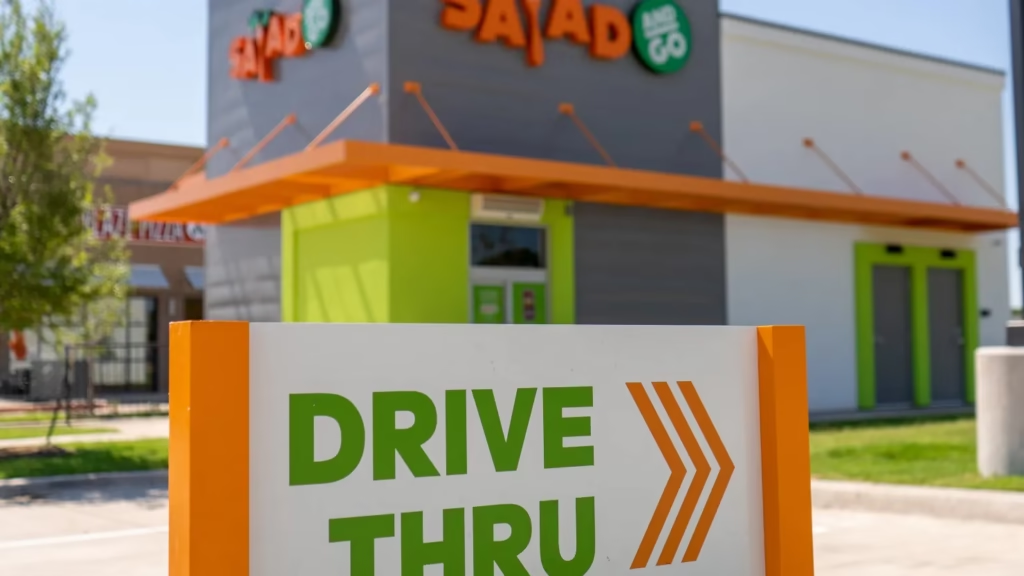
Drive-thru salad chain Salad and Go is pulling out of Texas and Oklahoma, closing every one of its locations in the two states and moving its headquarters back to Arizona. The decision marks a major shift for a company that expanded rapidly across the Southwest over the past few years and once operated more than 140 stores.
The closures will affect 32 locations in total — 25 in Texas and seven in Oklahoma — all of which are scheduled to shut down by January 11. The company confirmed the move in a statement and through interviews with regional business publications.
Salad and Go’s chief executive officer, Mike Tattersfield, said the company decided to step back from markets where performance lagged and refocus on areas where the business has historically been strongest.
“After assessing our business, we made the decision to exit our Texas and Oklahoma markets and refocus on strengthening our core operations in Arizona and Nevada,” Tattersfield said. “This step positions Salad and Go for long-term success and ensures we can keep delivering on our mission of making fresh, nutritious food convenient and affordable.”
A Second Wave of Closures
The latest shutdowns follow an earlier round of store closures announced in September 2025, when Salad and Go closed 41 locations, including all of its restaurants in Houston, Austin, and San Antonio, as well as several in the Dallas-Fort Worth area and Oklahoma. In North Texas alone, 18 stores were impacted during that earlier pullback.
Together, the September and January closures represent a significant reversal for a company that once opened stores at a breakneck pace. In 2023, Salad and Go was opening roughly one new location per week, betting that its low-cost, drive-thru model could scale quickly across multiple states.
At the start of 2024, the chain operated about 130 stores across Arizona, Texas, Oklahoma, and Nevada. After the closures are completed, Salad and Go will operate 64 locations in Arizona and seven in Nevada, according to the company’s website.
Why Expansion Fell Short
Tattersfield, who took over as CEO in April 2025, said the company’s rapid expansion outside Arizona stretched operations too thin and hurt overall performance.
“We chose to really focus where we’re most successful,” he told The Arizona Republic. “The soul of the brand is in Arizona.”
While some locations in Texas and Oklahoma performed well, overall sales were not strong enough to justify the cost of supporting those markets, especially the central kitchen in Dallas, which supplied ingredients to stores across the region. According to Tattersfield, the volume simply wasn’t there to make the model work profitably.
The experience highlights a common challenge in the restaurant industry: what works well in one region does not always translate smoothly to another. Differences in customer habits, real estate costs, labor availability, and supply chains can quickly turn expansion from an opportunity into a strain.
Headquarters Move Back to Arizona
Along with the store closures, Salad and Go is also moving its corporate headquarters from Coppell, Texas, back to Tempe, Arizona. The relocation reflects the company’s renewed focus on its home market and its plan to rebuild from a smaller, more stable base.
Arizona remains Salad and Go’s most profitable market, and Tattersfield acknowledged that the company neglected its home state while chasing growth elsewhere.
“When I came in, within six months, I said, ‘Why did we go so big and so bold?’” he said. “We need to build up a lot more around Arizona, fill out the geography that makes sense, before you start reaching across the central United States.”
A Brand That Grew Too Fast
Salad and Go was founded in 2013 in Gilbert, Arizona, by husband-and-wife team Tony and Roushan Christofellis. The concept was built around affordable, fresh food served quickly through drive-thru locations, with most menu items priced under $10.
The idea resonated with customers looking for healthier fast-food options, and the chain quickly gained attention as a potential disruptor in the restaurant industry. That early success fueled aggressive expansion plans.
Over time, however, ownership of the company changed hands. The Christofellis family sold Salad and Go to focus on other Arizona-based concepts, including Angie’s Lobster and Angie’s Prime. Today, Salad and Go is majority-owned by Volt Investment Holdings, a private-equity firm based in New York, with Tattersfield and other investors holding minority stakes.
The involvement of private equity often brings pressure to grow quickly, and Salad and Go’s expansion strategy reflected that urgency. But the recent pullback suggests the company may have expanded faster than its systems and finances could support.
Impact on Employees and Communities
The closures will affect dozens of communities across Texas and Oklahoma, as well as hundreds of employees. In his statement, Tattersfield thanked team members in those states and said the company hopes to return someday.
“Texas and Oklahoma are important markets to us, and we intend to return when the time is right,” he said.
For now, however, the company is choosing to stabilize rather than push ahead, a move that may disappoint fans of the brand but could strengthen its long-term prospects.
Refocusing on the Core Business
As part of its renewed focus on Arizona, Salad and Go announced several new menu items on January 7, including the Big AZ burrito, a breakfast burrito featuring shredded beef and extra eggs. The launch signals that the company is investing again in menu development and local marketing in its strongest market.
The strategy going forward appears to be simple: operate fewer stores, focus on regions where the brand performs best, and rebuild profitability before attempting another expansion.
A Cautionary Tale for Fast-Growing Chains
Salad and Go’s retreat from Texas and Oklahoma serves as a reminder that rapid growth can carry serious risks. Expanding too quickly can strain supply chains, management teams, and finances, even for brands with strong customer appeal.
By stepping back now, the company is betting that a smaller footprint and tighter focus will allow it to regain momentum. Whether Salad and Go eventually returns to Texas and Oklahoma remains to be seen, but for now, its future is firmly rooted back in Arizona — where the brand began and where it continues to perform best.
For investors and industry watchers, the move underscores a key lesson: growth is important, but sustainable growth matters more.
Read also:
Student Loans: Wage Garnishment Restarts as Millions of Borrowers Face Collections in 2026
S&P 500 Today (7 January 2026): S&P 500 Hits New Record, But Stock Market Rally Loses Momentum
Alaska Airlines Places Biggest-Ever Boeing Order,, Signals Long-Term Growth Confidence
Simply Good Foods Earnings Preview: What Peer Results Signal for Q4
Discord IPO: Chat Platform Confidentially Files for US Stock Market Listing