


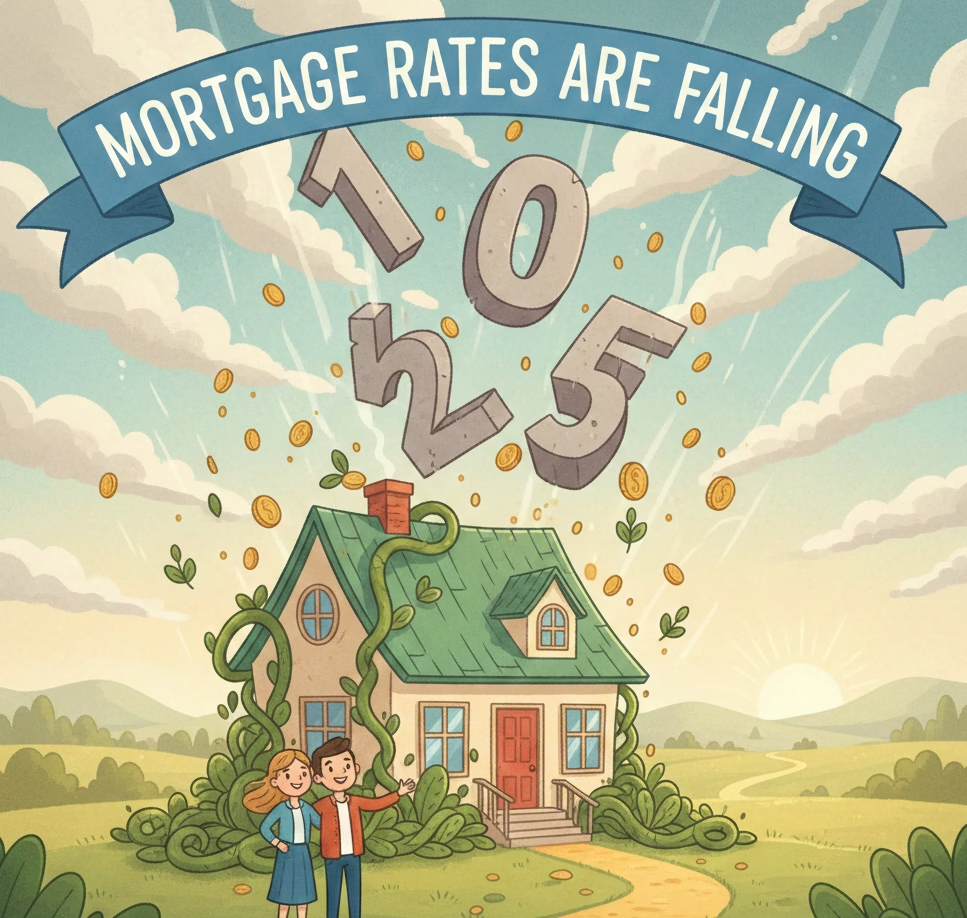
Mortgage Rates Fall to Lowest Level in More Than Three Years
Mortgage rates fall to their lowest level in the U.S. in more than three years, offering a rare moment of relief in a housing market that has felt frozen since rates surged in 2022. According to Freddie Mac, the average rate on a 30-year fixed mortgage fell to 6.06% for the week ending January 15, the lowest level since September 2022.
While rates are still well above the historic lows seen during the pandemic, this decline is meaningful. It has already started to change behavior among buyers and homeowners, and it could play a key role in shaping the upcoming spring housing season.
Why mortgage rates are falling
Mortgage rates are influenced by several factors, including government bond yields, investor demand for mortgage-backed securities, and expectations about the economy. This week’s drop appears to be driven largely by a surge in demand for mortgage bonds.
Earlier this month, President Donald Trump announced plans for government-backed institutions Fannie Mae and Freddie Mac to purchase up to $200 billion in mortgage bonds. The goal is simple: increase demand for these bonds so their yields fall, which typically leads to lower mortgage rates for consumers.
Markets reacted almost immediately. As demand for mortgage bonds increased, yields dropped, pulling mortgage rates lower. While economists say the full scale of these purchases has not yet appeared in official data, early signs suggest they are already having a modest short-term impact.
Susan Wachter, a real estate professor at the University of Pennsylvania’s Wharton School, noted that the effect is visible, even if the total bond purchases haven’t yet reached the announced level.
Immediate impact on buyers and homeowners
Lower rates are already translating into real financial savings. To put it into perspective:
- Last year, the average 30-year mortgage rate was 7.04%
- At that rate, buying a $450,000 home with a 20% down payment meant monthly payments of about $2,405
- At today’s 6.06% rate, those payments drop to around $2,172
That’s a monthly savings of roughly $230, or nearly $84,000 over the life of a 30-year loan.
This kind of difference matters, especially in a market where affordability has been stretched to its limits. As a result, mortgage applications have jumped, both from buyers looking to purchase homes and from homeowners seeking to refinance existing loans.
Freddie Mac’s chief economist Sam Khater said the pickup in activity shows how sensitive the market is to even small rate declines. He added that the housing market now appears “poised for a solid spring sales season.”
The “lock-in effect” is starting to ease
One of the biggest problems in the housing market over the past few years has been the so-called lock-in effect. Millions of homeowners secured mortgage rates below 3% during the pandemic and have been unwilling to sell because buying another home would mean taking on a much higher rate.
That dynamic is beginning to change.
According to Realtor.com, the share of homeowners with mortgage rates above 6% has now exceeded the share with ultra-low rates below 3%. This means fewer homeowners have a strong financial reason to stay put, which could slowly increase the number of homes available for sale.
As this pressure eases, more people may feel comfortable moving for work, family needs, or lifestyle changes, something that has been delayed for years.
Housing activity is picking up, but prices remain high
There are already signs of increased movement in the market. Sales of previously owned homes rose 5.1% in December, marking the fourth straight monthly increase, according to the National Association of Realtors. This is the longest stretch of gains since mid-2020.
However, higher activity has not yet led to lower home prices. The median price of an existing home reached $405,400 in December, marking the 30th consecutive month of year-over-year price increases.
This highlights a key reality: lower mortgage rates alone cannot fix the affordability crisis. Limited housing supply continues to support high prices, even as borrowing costs fall.
Why this matters beyond housing
A more active housing market affects more than just buyers and sellers. According to Redfin’s chief economist Daryl Fairweather, being stuck in an unsuitable home can ripple through the broader economy.
People may delay changing jobs, starting families, or relocating for better opportunities because they feel financially trapped. Even if lower rates don’t dramatically reduce home prices, increased mobility can improve quality of life and help the economy function more smoothly.
In that sense, easing mortgage rates could unlock decisions that have been on hold for years.
The bottom line
Mortgage rates hitting a three-year low is a significant development, even if rates remain well above pandemic levels. The decline is already boosting demand, easing the lock-in effect, and encouraging more movement in the housing market.
While affordability challenges remain, lower rates could help restore balance by bringing both buyers and sellers back into the market. If current trends continue, the spring housing season may finally see momentum after years of stagnation.
For now, the message is clear: small changes in mortgage rates can still have a big impact, on monthly budgets, housing activity, and the wider economy.
Disclaimer
This article is for informational purposes only and should not be considered financial, investment, or legal advice. Mortgage rates, housing market conditions, and government policies can change without notice. Readers are encouraged to conduct their own research or consult with a qualified financial professional before making any home-buying, refinancing, or investment decisions. The views expressed are based on publicly available information and expert commentary at the time of publication.
Read more:
What Is the Federal Reserve? Meaning, Role and Why It Matters
Oil Prices Fall as Trump Pauses US Action Against Iran
German AI Startup Parloa Triples Valuation to $3 Billion in Just Eight Months
XRP Price Rises as Ripple Secures Key Luxembourg EMI License