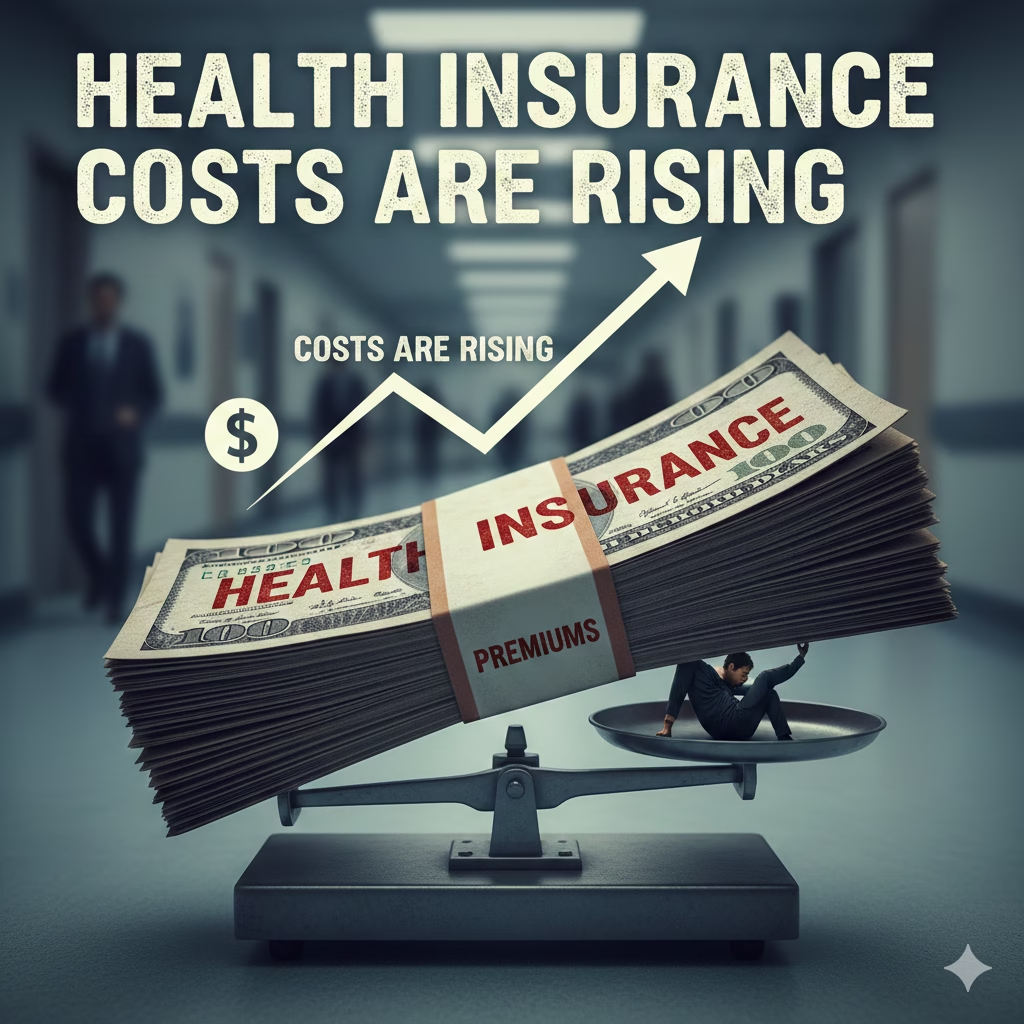
Health insurance costs are set to become a major financial stress point for many Southern Californians in 2026. As Congress debates whether to extend federal premium subsidies introduced during the COVID era, millions of people are preparing for higher monthly bills — and some may be forced to give up coverage altogether.
For households already juggling rent, groceries, fuel, and education expenses, the possible jump in insurance premiums isn’t just a health issue. It’s a serious personal finance problem.
This article breaks down what’s happening, why it matters financially, and how individuals and families can think through their choices without getting lost in complex insurance language.
Why Health Insurance Costs Are Rising
At the center of the issue are enhanced federal premium tax credits, which were introduced under the American Rescue Plan in 2021. These subsidies made health insurance more affordable for millions by:
- Increasing the amount of financial help people receive
- Allowing higher-income households to qualify for assistance
- Reducing monthly premiums across the board
These credits were later extended, but unless Congress acts soon, they will expire at the end of the year.
If that happens, the impact will be immediate.
According to Covered California, average monthly premiums for people receiving financial help could rise by nearly 97%. For many families, that’s not a gradual increase — it’s a financial cliff.
How Big Is the Impact in Southern California?
Southern California is one of the regions most exposed to these changes.
More than 800,000 people in the region receive subsidized coverage through Covered California. In areas like Los Angeles County, Orange County, and the Inland Empire, nearly nine out of ten enrollees rely on financial assistance to afford their plans.
Without the enhanced subsidies:
- Inland Empire residents could see costs rise by around $111 per month
- Many middle-income households would lose all premium support
- Some people would be priced out of coverage entirely
From a finance perspective, this means hundreds or even thousands of dollars in additional annual expenses — at a time when many households already feel stretched.
The Middle-Class Squeeze
One of the most important financial implications is how these changes affect middle-income earners.
Under the enhanced subsidies, people earning above 400% of the federal poverty level still qualified for help. Without them, that support disappears completely.
For 2026, that income threshold is roughly:
- $62,600 for an individual
- $128,600 for a family of four
Households just above these levels may earn “too much” for subsidies but not enough to comfortably absorb full insurance premiums, which can run into several hundred dollars per month.
This creates a classic financial squeeze:
- Income is not low enough for assistance
- Expenses are too high to self-insure safely
- Savings and emergency funds may be at risk
Early Signs: People Are Already Changing Behavior
Even before the subsidies officially expire, consumer behavior is shifting.
Covered California reports that enrollment for 2026 is already 30% lower than at the same point last year. Many people are responding to uncertainty by choosing plans with lower monthly premiums — even if that means higher out-of-pocket costs later.
From a finance lens, this is a trade-off:
- Lower monthly payments
- Higher financial risk during illness or emergencies
People aren’t ignoring insurance. They’re trying to manage cash flow in the short term, even if it increases long-term risk.
The Rise of High-Deductible Plans
One noticeable trend is the growing popularity of bronze and catastrophic plans.
These plans:
- Cost less each month
- Require much higher spending before insurance starts paying
- Can expose households to large bills during medical events
For someone earning $25,000 to $40,000 a year, a deductible of $7,000 or more is financially dangerous. It can wipe out savings, increase debt, or force people to delay care.
From a financial planning standpoint, these plans only work if:
- You have strong emergency savings
- You rarely need medical care
- You understand the risks clearly
For many households, those conditions don’t apply.
Why “Cheaper” Insurance Can Be More Expensive
As costs rise, some people may look outside the official marketplaces for alternatives that appear cheaper.
This is where caution is critical.
Short-term plans, indemnity plans, and health sharing arrangements often advertise low monthly costs. But they usually come with serious limitations, such as:
- No coverage for pre-existing conditions
- Limited prescription drug benefits
- Caps on how much the insurer will pay
- No guarantee that claims will be covered
From a financial risk perspective, these plans can leave people exposed to catastrophic expenses. A single hospital stay can cost tens of thousands of dollars — far more than what was saved in premiums.
Low monthly cost does not equal low financial risk.
What Happens If People Drop Coverage?
If premiums become unaffordable, some people may choose to go uninsured. That decision has wider consequences.
1. Financial Penalties
California still has a penalty for not having health insurance. While it may seem smaller than monthly premiums, it adds another cost without providing protection.
2. Higher Medical Debt
Uninsured patients often delay care until conditions worsen. When they do seek help, bills are much higher — and often unpaid, leading to collections and credit damage.
3. System-Wide Costs
Hospitals and providers rely on insured patients to keep services running. If coverage drops significantly:
- Providers may cut services
- Rural and safety-net hospitals may struggle
- Costs can shift back to insured patients through higher prices
In other words, even people who keep insurance may feel the effects.
Why This Matters Beyond Health Care
This isn’t just a health policy issue. It’s a household finance issue with ripple effects across the economy.
When insurance costs rise sharply:
- Consumers spend less on other goods and services
- Savings rates decline
- Debt increases
- Financial stress grows
For Southern California — already dealing with high housing and living costs — higher insurance premiums act like another invisible tax on income.
What Smart Consumers Can Do Now
While individuals can’t control federal policy, they can make informed financial decisions.
1. Enroll on Time
To have coverage starting in January 2026, you must enroll by December 31. Waiting can limit options and create gaps.
2. Compare Carefully
Even within the same insurer, plans can vary widely in cost and coverage. A small change can reduce premiums without sacrificing key benefits.
3. Think Beyond Monthly Cost
Focus on:
- Deductibles
- Out-of-pocket maximums
- Prescription coverage
- Provider networks
The cheapest plan today may be the most expensive plan later.
4. Protect Emergency Savings
If choosing a high-deductible plan, ensure you have cash set aside. Without savings, these plans can become financial traps.
The Political Uncertainty Factor
Congress may still act to extend the subsidies, possibly retroactively. But financial planning should be based on what is certain, not what is hoped for.
Markets don’t like uncertainty — and neither do household budgets.
For now, the safest assumption is that enhanced subsidies will expire. Consumers who plan accordingly will be better positioned if costs rise — and pleasantly surprised if relief arrives.
Final Thoughts: Insurance as Financial Protection
Health insurance is often discussed as a health issue, but at its core, it’s a financial protection tool.
The debate over subsidies highlights a bigger truth:
- When insurance becomes unaffordable, financial risk shifts back to individuals
- Middle-income households are especially vulnerable
- Short-term savings can create long-term losses
For Southern Californians in 2026, the challenge will be balancing monthly affordability with long-term financial security — in an environment where both are under pressure.
As costs rise, informed decisions matter more than ever.
Other posts you might be interested in:
What Is the Federal Reserve? Meaning, Role and Why It Matters