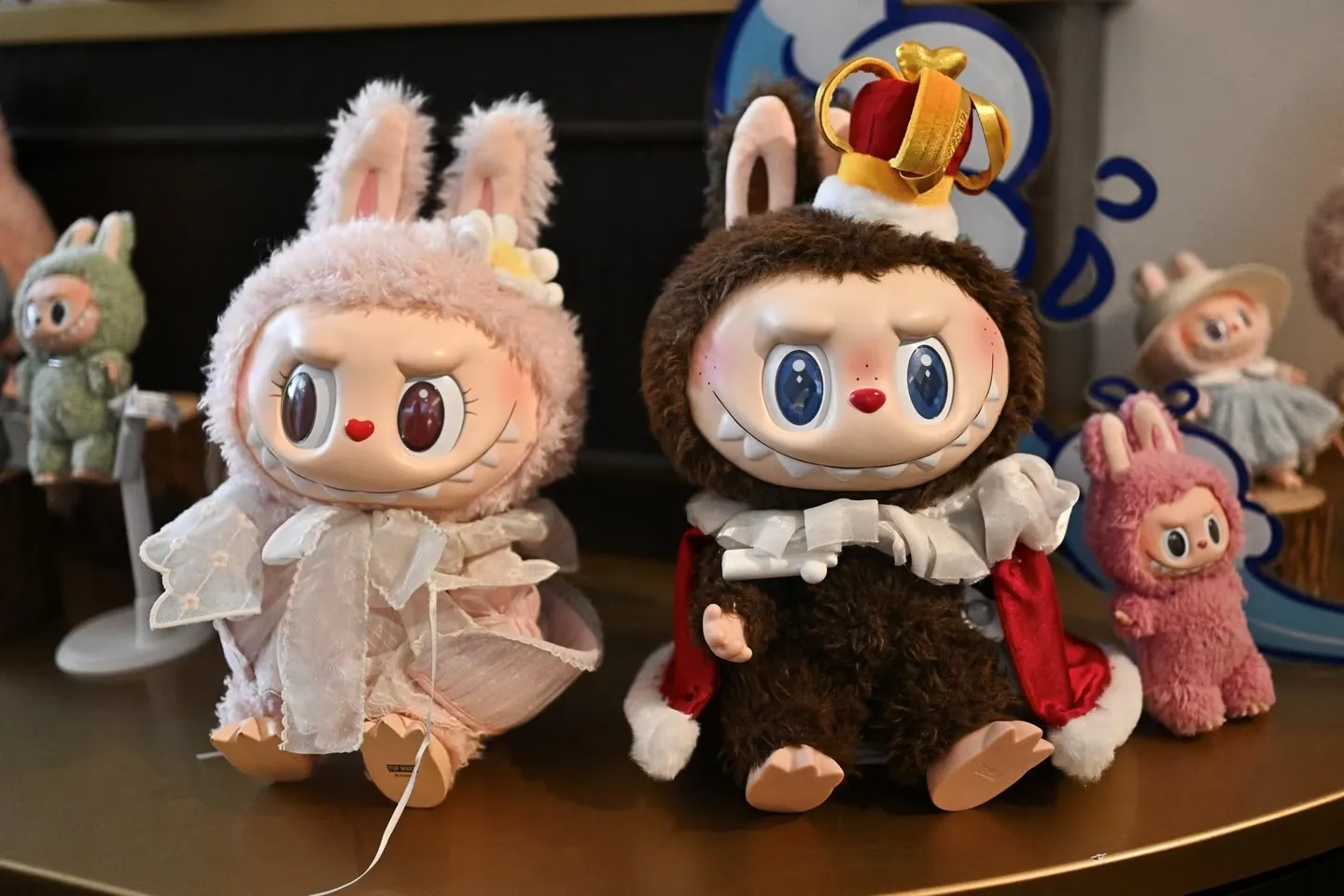
Just a few months ago, Labubu dolls were everywhere. Social media was flooded with unboxing videos, celebrities showed them off, and collectors queued for hours outside stores. The sudden global obsession turned Pop Mart International Group into one of China’s hottest companies and made its founder, Wang Ning, richer than Alibaba cofounder Jack Ma.
That moment did not last long.
As the excitement around Labubu cools, Pop Mart’s stock has fallen sharply, and Wang’s personal wealth has taken a massive hit. According to Forbes estimates, Wang has lost around $11.3 billion since August, cutting his fortune from $27.5 billion to about $16.2 billion. Most of his wealth is tied directly to Pop Mart shares, which are listed in Hong Kong.
A Rapid Rise — and an Even Faster Fall
Pop Mart’s shares peaked in August at nearly HK$340, driven by explosive demand for Labubu dolls. At the time, the rabbit-like toy with pointed ears and a mischievous grin became a cultural phenomenon, especially among Gen Z consumers. The dolls sold out quickly, resale prices soared, and Pop Mart’s financial results looked extraordinary.
Since then, the picture has changed. The stock has dropped about 40%, now trading near HK$200. That fall pushed Wang below Jack Ma again in China’s billionaire rankings and erased billions in market value.
Investors are starting to ask a hard question: Was Labubu a lasting brand — or just a short-lived trend?
Slowing Growth Raises Red Flags
Pop Mart’s recent success was driven by incredible growth. In the first half of the year, the company reported that revenue tripled to 13.9 billion yuan, while profit rose five times to 4.6 billion yuan. Wang himself has said the company could “easily” reach 30 billion yuan in sales in 2025.
However, analysts now believe that growth will slow sharply next year.
Morningstar analyst Jeff Zhang expects revenue growth to drop to around 30%, compared with an estimated 200% growth this year. That slowdown is partly due to what analysts call a “high base effect,” meaning it’s much harder to grow quickly after such an explosive year. But there are other concerns as well.
Demand in Greater China appears to be weakening, and overseas markets are no longer growing at the breakneck pace seen earlier this year. At the same time, resale prices for Labubu dolls are falling — a key signal that excitement among collectors is fading.
Falling Resale Prices Signal Cooling Demand
One of the clearest warning signs comes from China’s resale platforms. On Dewu, a popular resale marketplace, prices for the latest Labubu 4.0 series have dropped about 30% since their release in late August. The dolls now sell for around 115 yuan, down from much higher levels shortly after launch.
While that is still above the official retail price of 79 yuan, the reduced gap has discouraged many resellers. Some collectors had hoped to make quick profits by buying and flipping dolls online. As prices fell, many walked away.
For collectibles, falling resale prices often matter more than falling retail sales. They signal that buyers no longer expect prices to rise in the future — and that belief is critical to maintaining hype.
Too Much Supply, Too Fast?
Another factor behind the slowdown may be Pop Mart’s own strategy.
The company has significantly increased production in recent months. According to a December research note from Deutsche Bank, Pop Mart is now producing 50 million dolls per month, up from just 10 million earlier in the year.
That increase is intentional. Pop Mart wants to move beyond scarcity-driven sales and become a global entertainment brand similar to Disney or Sanrio. Instead of relying on limited releases and long queues, the company is trying to make its products more widely available.
But that shift comes with risks.
“When collectibles become too easy to buy, urgency disappears,” said Mark Tanner, managing director of China Skinny, a Shanghai-based market research firm. He believes Pop Mart is deliberately trading hype for scale, but that decision may weaken demand in the short term.
Deutsche Bank analyst Sammi Xu also warned of “fashion fatigue,” noting that foot traffic has declined and queues have disappeared at many overseas stores. According to Xu, demand now spikes mainly during new store openings or in select cities.
Wall Street Saw Trouble Coming
Some investors were warned early.
In September, JPMorgan downgraded Pop Mart’s stock, saying its valuation was stretched and growth expectations were too optimistic. At the time, the downgrade was largely ignored. The stock had already gained more than 200% for the year, and many investors believed the Labubu trend still had room to run.
Three months later, JPMorgan’s caution looks well-timed. As growth slowed — especially in North America, where revenue growth dropped from over 900% to about 424% — investors began to reassess their assumptions.
Even though those numbers would be exceptional for most companies, markets focus on direction, not just size. When growth slows sharply, confidence often disappears just as fast.
Can Pop Mart Bounce Back?
The future of Pop Mart now depends on two things: whether Labubu can regain momentum, and whether the company can create another hit brand.
Some analysts believe Labubu will settle into a more stable, long-term role as a popular toy — just without the speculative frenzy. In that scenario, Pop Mart would remain profitable but lose its status as a market darling.
Others are more cautious. DZT Research’s Ke Yan believes the company is entering an “IP gap period,” where none of its other product lines — such as Skullpanda or Twinkle Twinkle — have proven they can match Labubu’s success. He warns the stock could fall as low as HK$100 next year.
There is also hope that Pop Mart could expand Labubu beyond toys. A long-rumored movie collaboration with Sony could help turn Labubu into a global entertainment brand, following a playbook similar to Disney or Sanrio. Such a move could reignite interest and diversify revenue.
From Mania to Reality
Pop Mart’s story is a classic example of how quickly trends can change. Labubu went from must-have collectible to cautionary tale in just months. The company is still growing, still profitable, and still far larger than it was a year ago.
But markets are unforgiving when expectations shift.
For Wang Ning, the past year has been a dramatic reminder that wealth built on fast-moving consumer trends can rise — and fall — at astonishing speed. Whether Labubu becomes a lasting icon or a brief moment in pop culture history will determine not only Pop Mart’s future, but also how investors remember one of China’s fastest-rising business stories.