


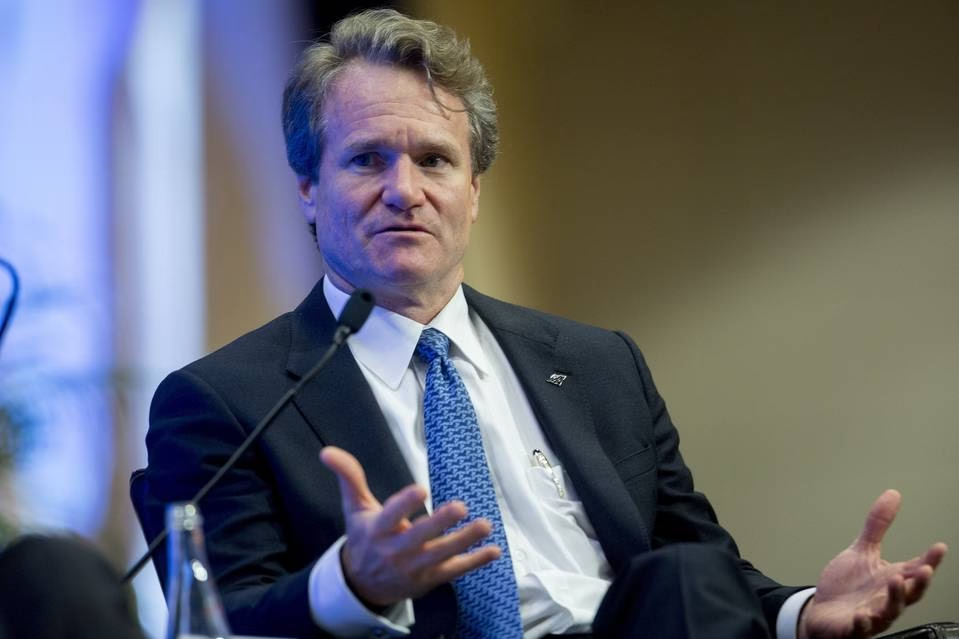
According to Bank of America Chairman and CEO Brian Moynihan, the global economy is entering 2026 with cautious optimism, supported by resilient consumers, steady job growth, easing inflation, and continued investment in technology—especially artificial intelligence (AI). At the same time, he and Bank of America’s analysts warn that risks remain, ranging from geopolitical conflict to uneven affordability pressures and uncertainty around how AI will ultimately deliver profits.
Bank of America’s latest outlook outlines 10 major trends expected to drive markets in 2026, spanning economic growth, technology, commodities, housing, and consumer behavior. These themes were reinforced by Moynihan’s recent interview on Face the Nation, where he offered rare insight into real-time spending data, labor markets, AI adoption, and the future of interest rates.
Together, the research and the CEO’s comments paint a picture of an economy that is slower than the post-pandemic surge but still fundamentally strong.
1. The U.S. Economy: Slower, but Still Growing
Bank of America economists have raised their 2026 U.S. GDP growth forecast to 2.4%, a notable upgrade from earlier expectations. According to Moynihan, this growth is being supported by three key factors:
- Continued consumer spending
- Fiscal stimulus and tax-related investments
- Gradual interest-rate cuts by the Federal Reserve
Despite widespread concern about affordability, Americans are still spending. Bank of America’s transaction data shows that spending during the holiday season rose by more than 4% compared with the previous year.
Moynihan emphasized that this growth is not limited to wealthy households. Spending is increasing across lower-, middle-, and upper-income groups, even though people feel pressure from higher prices.
“People feel inflation more than they see wage growth, even when wages are rising,” Moynihan explained.
This disconnect between sentiment and behavior is one of the defining features of the current economy.
2. The Consumer Remains the Backbone
According to Moynihan, the single biggest risk to the U.S. economy is a pullback in consumer spending. For now, there are few signs of that happening.
- Employment remains high
- Credit quality is strong
- Wage growth is running around 3%
While unemployment has edged up slightly, it remains historically low. From Bank of America’s perspective, this suggests the consumer is stable heading into 2026.
However, Moynihan acknowledged that affordability concerns are real—especially for housing, rent, and everyday expenses. These pressures explain why people say the economy feels weak even while they continue to spend.
3. China’s Growth Is Stabilizing
Bank of America has also raised its growth outlook for China, citing recent government stimulus and improving trade relations following high-level diplomatic engagement.
According to the bank, China’s policy environment has become more supportive, offering relief to global supply chains and emerging markets that depend on Chinese demand.
For global investors, this matters because China’s stabilization reduces downside risk, especially for commodities, manufacturing, and export-oriented economies.
4. Artificial Intelligence: Not a Bubble—Yet
AI is one of the most powerful forces shaping markets today, but Bank of America does not believe the U.S. is currently in an AI bubble.
Using its internal Bubble Risk Indicator, the bank finds that while technology valuations are elevated, they are not showing the extreme instability seen during the dot-com era.
Still, risks remain.
“AI monetization remains to be determined,” analysts noted, adding that power supply and infrastructure could become bottlenecks.
Moynihan echoed this caution. While Bank of America has used AI internally for years—through tools like its virtual assistant Erica—he stressed that customer-facing AI must be implemented carefully, especially in financial services where trust is critical.
5. AI Will Change Jobs, Not Eliminate Work
A major concern surrounding AI is job losses. Moynihan took a more balanced view.
He noted that technology has always changed how people work, but history shows that employment continues to grow over time. From 1969 to 2019, U.S. employment doubled despite massive technological change.
At Bank of America, AI is being used to:
- Improve efficiency
- Support employees with better tools
- Speed up decision-making
Importantly, Moynihan said efficiency gains are expected to support growth—not replace workers outright.
6. Stock Markets: Earnings Strong, Returns Modest
Bank of America expects strong corporate earnings growth in 2026, but more modest gains in stock prices, especially for the S&P 500.
This reflects:
- High starting valuations
- Slower economic growth
- More selective investor behavior
Emerging markets, however, may benefit from a weaker dollar, improving global trade, and better growth outside the U.S.
7. Interest Rates: Stability, Not a Sharp Drop
One of Moynihan’s clearest messages was that long-term interest rates are unlikely to fall sharply.
Bank of America expects:
- Fed policy rates to move lower
- The 10-year Treasury yield to remain around 4–4.5%
This means mortgage rates are unlikely to return to the ultra-low levels seen during the pandemic.
“We shouldn’t be cheering for 3% mortgage rates,” Moynihan said, calling them an anomaly tied to crisis conditions.
8. Housing: Supply Is the Real Problem
Housing activity remains weak, but not because of demand alone. According to Moynihan, the real issue is supply.
Years of restrictive zoning, slow permitting, and under-building have created a nationwide housing shortage. Lower rates alone will not fix this problem.
Bank of America expects:
- Home prices to remain mostly flat
- Affordability to improve slowly as wages rise
9. Copper and Commodities Stand Out
Among physical assets, copper is a standout for 2026.
Bank of America expects strong performance due to:
- Tight global supply
- Rising demand from electrification and AI infrastructure
Other commodities face more mixed conditions, but copper’s role in power grids, electric vehicles, and data centers gives it structural support.
10. A Year of Cautious Optimism
Taken together, Bank of America’s outlook suggests 2026 will not be a boom year—but not a bust either.
Growth is slowing but stable. Inflation is easing but still on people’s minds. AI promises productivity gains but comes with uncertainty. Consumers feel stretched but continue to spend.
My Analysis: Why This Outlook Matters
What stands out most is how grounded this outlook is in real behavior rather than headlines. Moynihan’s access to transaction-level data offers a clearer view of the economy than surveys or sentiment polls.
Three themes deserve special attention:
- The resilience of the consumer – As long as jobs remain available, spending is likely to hold up.
- AI realism – The technology is powerful, but profits will take time to materialize.
- Structural constraints – Housing shortages, energy needs, and supply chains will shape outcomes more than interest rates alone.
For investors, this suggests a need for balance rather than bold bets: diversification across regions, selective exposure to technology, and attention to real assets like copper.
As Moynihan made clear, the economy is no longer driven by emergency policies or extremes. Instead, it is settling into a more normal—but complex—phase, where steady growth matters more than rapid gains.
Other posts you might be interested in:
Southern California Health Insurance Costs May Rise in 2026
Oman’s Wedding and Luxury Tourism Boom Fuels Economic Growth
Lou Gerstner Dies at 83: The CEO Who Saved IBM and Changed Corporate Turnarounds