


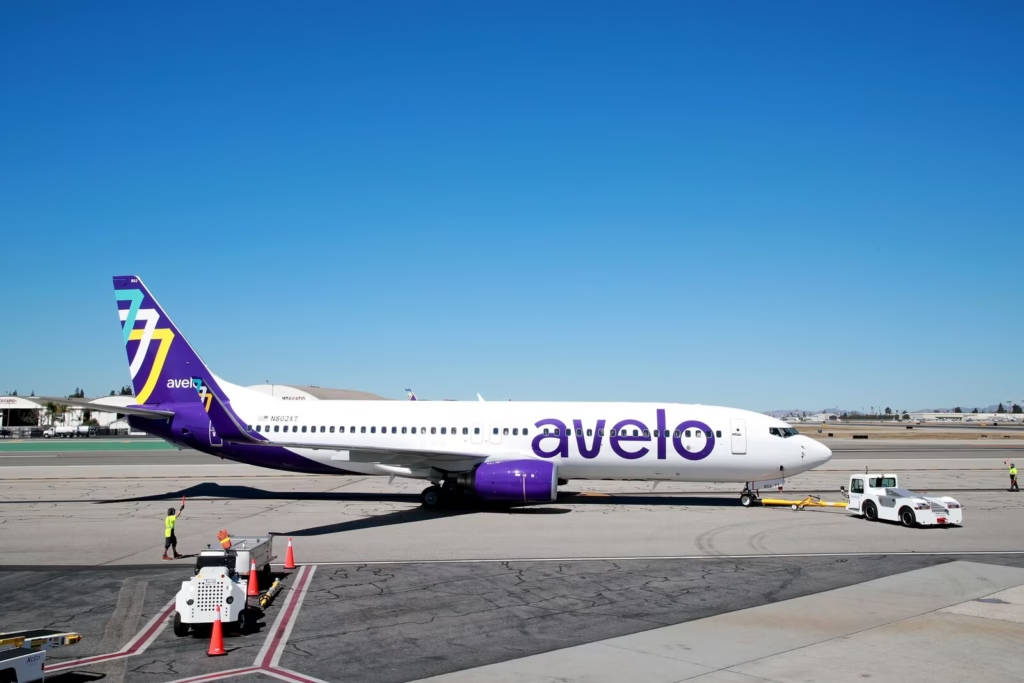
Avelo Airlines has taken a major step by launching the first-ever international commercial flight from Wilmington International Airport (ILM) in North Carolina. The new nonstop service connects Wilmington directly to Punta Cana in the Dominican Republic, a popular Caribbean tourist destination. While the route itself may seem modest—operating twice a week—it carries much larger financial and strategic implications for both the airline and the airport.
For Wilmington, this flight represents a milestone. For Avelo, it highlights a business model built around serving overlooked cities, controlling costs, and gradually expanding into international leisure travel.
A Milestone for Wilmington International Airport
The inaugural flight to Punta Cana departed just before Christmas, a peak travel period. The celebration at the airport reflected more than holiday excitement—it marked Wilmington’s entry into international commercial air travel. Until now, ILM primarily offered domestic routes connecting travelers to cities in the Northeast, Midwest, and Florida.
Airport officials see this new route as a turning point. Wilmington International Airport has experienced rapid growth over the past few years, and 2025 is shaping up to be its strongest year yet. Passenger boardings are projected to reach around 880,000 this year, which would represent a 20% increase compared to the previous year. Through November alone, the airport had already recorded more than 830,000 passengers.
This growth is not happening in isolation. The airport is in the middle of a $130 million expansion project that includes a new parking garage, rental car facilities, and an improved terminal entrance. These upgrades are designed to support higher passenger volumes and improve efficiency—key factors for attracting and retaining airlines.
Avelo’s Different Approach to Air Travel
Avelo Airlines entered the Wilmington market in June 2022 with just a few routes. Since then, it has steadily expanded its presence. Today, Avelo operates 15 to 17 nonstop routes from Wilmington, depending on the season, and has established a base of operations at the airport with aircraft and crew stationed locally.
Unlike major airlines, Avelo focuses on routes that are often ignored by larger competitors. Instead of flying between major hubs, it connects smaller cities directly to leisure destinations. This reduces competition, lowers operating costs, and allows the airline to charge lower fares while still making money.
Another key part of Avelo’s strategy is unbundling. Passengers pay a basic fare and then choose which extras they want, such as checked baggage or onboard snacks. This approach appeals to cost-conscious travelers and helps keep ticket prices low.
The Punta Cana route fits neatly into this model. It is a leisure-focused destination, aimed at vacation travelers rather than business passengers. The flight operates only twice a week and is seasonal, running through April. This limits risk while allowing Avelo to test demand before committing more resources.
International Expansion Without Overreach
Punta Cana becomes Avelo’s third international destination, joining Cancun and Montego Bay, Jamaica. These are all high-demand tourist locations with strong appeal to U.S. travelers. Importantly, Avelo already serves Punta Cana from other cities such as Raleigh-Durham and Hartford, which means it has experience selling this route.
From a financial perspective, this matters. Airlines reduce risk when they expand into markets they already understand. By adding Wilmington to an existing international network, Avelo can reuse marketing strategies, pricing models, and operational experience.
The airline has also stated that it will closely track booking data from this route. If demand is strong, additional international flights could follow. If not, the limited schedule makes it easier to scale back without major losses.
Competition Is Heating Up
Avelo’s success has not gone unnoticed. Other low-cost airlines, such as Breeze Airways, have started flying some of the same routes. While competition can put pressure on ticket prices, it also signals that demand exists.
Avelo’s leadership has acknowledged this challenge but believes there is room for multiple airlines in growing markets like Wilmington. The airport’s rapid increase in seat capacity—up 66% between 2022 and 2025—suggests that passenger demand is expanding fast enough to support more service.
That said, competition will likely force airlines to stay disciplined. Routes that do not perform well may be cut, and only those with consistent demand will survive.
Controversy and Public Perception
Avelo has also faced criticism over its contracts with the U.S. government, including flights related to immigration enforcement. While the airline has defended this work as standard industry practice, public perception can still affect a brand.
From a financial standpoint, these contracts provide steady income that is not tied to passenger demand. This can help balance revenue during slower travel periods. However, airlines must manage reputational risks carefully, especially when expanding into new communities.
Looking Ahead: Bigger Plans for 2026
Avelo’s ambitions extend well beyond Wilmington. The airline has announced plans to order 50 new Embraer 195-E2 aircraft starting in 2026. These planes are smaller, more fuel-efficient, and designed for short to medium routes. They also feature a two-by-two seating layout, eliminating middle seats.
For Avelo, these aircraft could be a game-changer. Lower fuel costs and right-sized planes make it easier to serve smaller cities profitably. Wilmington, with its growing passenger base and expanding infrastructure, is well-positioned to benefit from this next phase of growth.
Airport officials believe that Avelo’s expansion aligns perfectly with ILM’s long-term development plans. More routes mean more passengers, which in turn justifies further investment in facilities.
Financial Analysis: Why This Move Makes Sense
From a financial perspective, Avelo’s Wilmington–Punta Cana route reflects a low-risk, high-potential strategy.
1. Controlled Risk
The route is seasonal and operates only twice a week. This limits costs while allowing Avelo to test demand. If bookings are strong, the airline can expand. If not, losses remain manageable.
2. Strong Leisure Demand
Caribbean travel remains popular, especially during winter months. Leisure travelers are often willing to fly on specific days, making twice-weekly service viable.
3. Airport Growth Supports Airline Growth
Wilmington’s rapid increase in passengers and infrastructure investment reduces operational friction. A growing airport creates a healthier environment for airlines to succeed.
4. Diversified Revenue Streams
Avelo balances ticket sales with optional fees and government contracts. This diversification helps stabilize cash flow.
5. Scalable Future Expansion
With new aircraft coming in 2026, Avelo can add routes without drastically increasing costs. Wilmington is likely to be part of that expansion.
Bottom Line
Avelo’s first international flight from Wilmington is not just about reaching a Caribbean beach. It is a calculated business move that fits neatly into the airline’s broader strategy of serving growing, underserved markets. For investors, airport authorities, and local economies, this route offers a clear example of how careful expansion—done without overextending—can create long-term value.