EU Weighs €93 Billion Tariffs on US as Trump’s Greenland Threat Triggers Trade Crisis
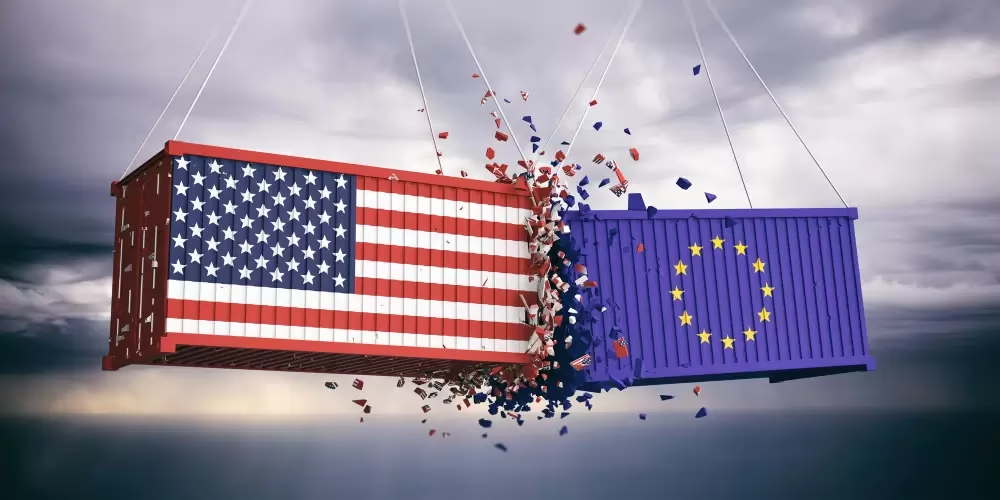
The European Union is preparing one of its strongest economic responses in decades after U.S. President Donald Trump threatened tariffs against European countries linked to military activity in Greenland. According to reports by the Financial Times, EU leaders are considering retaliatory tariffs worth €93 billion tariffs ($108 billion) on American goods, along with possible restrictions on U.S. companies operating in Europe.
The dispute marks a serious escalation in transatlantic tensions and could have wide-ranging economic consequences for both Europe and the United States.
What Triggered the EU’s Response?
The conflict began after President Trump renewed demands that the United States be allowed to take control of Greenland, a self-governing territory of Denmark. Trump argued that U.S. ownership was necessary for security reasons, a claim strongly rejected by Denmark and other NATO allies.
Following joint military exercises in Greenland involving European troops, Trump announced that the U.S. would impose new import tariffs starting February 1, initially at 10%, rising to 25% by June if European countries did not comply.
The countries targeted include:
- Denmark
- France
- Germany
- Sweden
- Finland
- Netherlands
- United Kingdom
- Norway
European leaders quickly condemned the move, calling it economic blackmail and a direct threat to national sovereignty.
EU’s Retaliation Plan: Tariffs and Market Restrictions
In response, EU officials are preparing a two-pronged strategy:
1. €93 Billion in Retaliatory Tariffs
The EU has a ready-made list of American products that could face new import taxes. This list was prepared last year but paused to avoid a trade war. It is now back on the table.
These tariffs could hit a wide range of U.S. exports, including:
- Industrial goods
- Consumer products
- Agricultural items
2. Restrictions on US Companies
The EU is also considering using its Anti-Coercion Instrument (ACI), a legal tool adopted in 2023 but never used before. If activated, it could:
- Limit U.S. companies’ access to EU markets
- Restrict investments
- Target services, including major U.S. technology firms
France and Germany are leading efforts to coordinate a strong EU-wide response, while some member states are urging caution and dialogue to prevent escalation.
Why Greenland Matters So Much
Greenland is strategically important due to:
- Its location between North America and Europe
- Access to Arctic shipping routes
- Valuable natural resources, including rare earth minerals
However, Greenland is not for sale, and Danish Prime Minister Mette Frederiksen has stated clearly that territorial integrity is non-negotiable.
European Commission President Ursula von der Leyen reinforced this position, saying the EU would “stand firm” in defending Greenland’s sovereignty.
Economic Impact: What This Means for Europe
If the EU moves forward with €93 billion in tariffs, the economic effects will be significant.
Higher Costs for Businesses
European companies that rely on U.S. materials or components could face higher import costs. This would:
- Reduce profit margins
- Push companies to raise prices
- Slow down investment plans
Inflation Pressure
Tariffs usually lead to higher prices for consumers. Everyday items, from electronics to food products, could become more expensive across Europe.
Risk to Export-Driven Economies
Countries like Germany and the Netherlands, which rely heavily on global trade, could suffer if the U.S. retaliates further. A trade slowdown would hurt manufacturing, logistics, and employment.
Financial Market Volatility
Uncertainty around trade relations often unsettles markets. Investors may:
- Move money into safer assets
- Reduce exposure to European stocks
- Delay long-term investments
Economic Impact: What This Means for the United States
The U.S. would also feel the consequences.
Reduced Access to EU Markets
Europe is one of America’s largest trading partners. Tariffs or restrictions could:
- Hurt U.S. exporters
- Reduce revenues for American firms
- Disrupt supply chains
Pressure on US Tech Companies
If the EU targets services under the ACI, major U.S. technology firms could face:
- Regulatory hurdles
- Reduced market access
- Lower European revenues
Political and Business Backlash
European officials hope that strong retaliation will increase pressure inside the U.S., especially from businesses and lawmakers who depend on stable trade relations.
Impact on the UK and Nordic Countries
Although the UK is no longer part of the EU, it is still affected by U.S. tariff threats.
- UK exporters could face higher costs and reduced competitiveness
- Nordic economies like Sweden and Finland, which rely on open trade, could see slower growth
- Denmark faces both economic and political pressure as the country directly tied to Greenland
These nations have emphasized that the military exercises were defensive and not a provocation.
Could This Become a Full Trade War?
EU diplomats stress that retaliation is not the preferred option. Many leaders want to use the threat of tariffs as leverage during upcoming talks at the World Economic Forum in Davos.
An emergency EU summit is expected later this week, and private meetings between Trump and European leaders could determine whether tensions ease or escalate.
However, officials warn that once tariffs are activated, reversing them becomes politically difficult.
What Investors Should Watch
For investors and businesses, key developments to monitor include:
- Outcomes of Davos meetings
- Any U.S. confirmation of February 1 tariffs
- EU decisions on activating the Anti-Coercion Instrument
- Market reactions in Europe and the U.S.
Trade conflicts often move fast and can reshape economic outlooks quickly.
Final Thoughts
The EU’s €93 billion tariff threat represents a turning point in U.S.–Europe relations. What began as a political dispute over Greenland has grown into a potential global trade shock.
For Europe, the challenge is to defend sovereignty without damaging its economy. For the U.S., the risk lies in isolating key allies and disrupting trade flows that support growth.
If compromise fails, consumers, businesses, and markets on both sides of the Atlantic will likely pay the price.
Read also:
World Markets Rattle as Trump Threatens New Tariffs on Europe Over Greenland