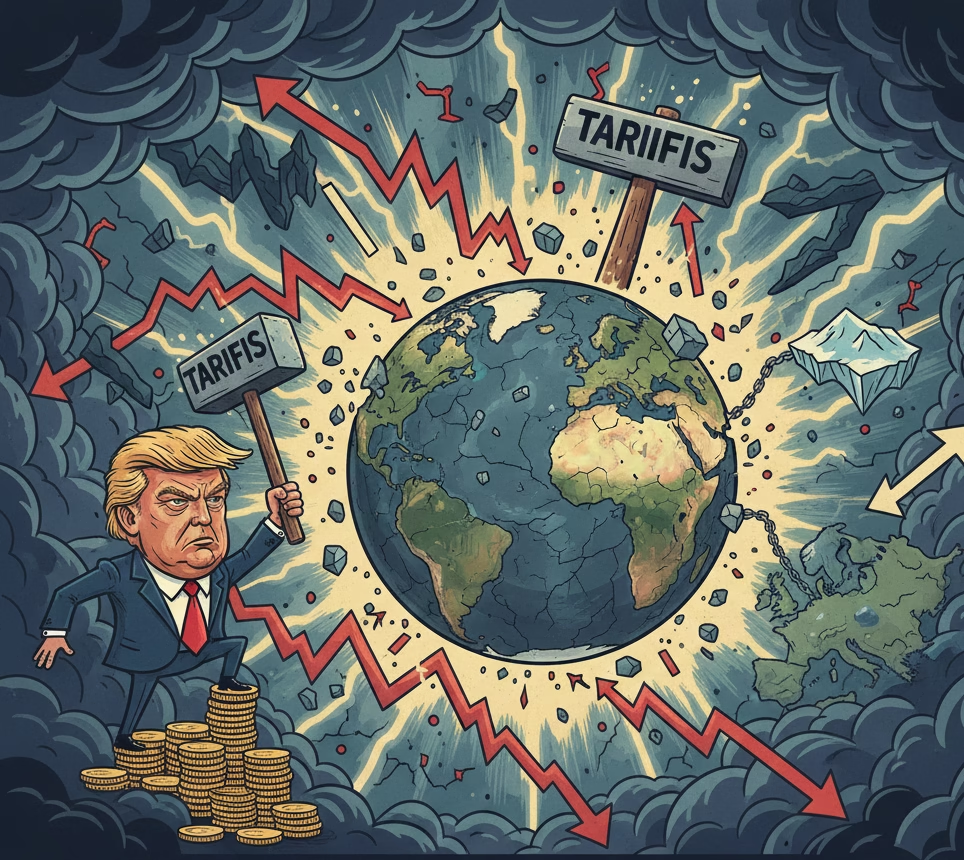
Global financial markets are bracing for renewed turbulence after U.S. President Donald Trump threatened to impose sweeping new tariffs on European nations over the long-running dispute surrounding Greenland. The announcement has revived fears of a renewed U.S.–EU trade conflict, unsettling investors who had grown comfortable with a period of relative trade calm.
Trump said the United States would impose an additional 10% import tariff starting February 1 on goods from Denmark, Norway, Sweden, France, Germany, the Netherlands, Finland, and Britain. If no agreement is reached, the tariff would rise sharply to 25% from June 1.
The trigger for the move was a joint European response backing Greenland after the U.S. signaled renewed interest in gaining control of the Arctic territory. While the tariffs are not yet guaranteed to take effect, the threat alone has been enough to shake confidence across global markets.
Why Greenland Has Become a Market Risk
Greenland, an autonomous territory within the Kingdom of Denmark, has strategic importance due to its location in the Arctic and its potential access to rare earth resources and shipping routes. Trump has repeatedly argued that U.S. control of Greenland would enhance national security.
The latest dispute escalated after several European NATO members announced limited military exercises in Greenland, sending only small contingents of troops. European leaders said the exercises were defensive and aimed at strengthening Arctic security. Trump, however, framed the move as hostile and responded with tariff threats.
Eight European nations issued a joint statement backing Greenland and warning that tariff threats risk triggering a “dangerous downward spiral.” Denmark’s prime minister said Europe must “stand firm,” while leaders from France, the UK, and Sweden openly rejected what they described as economic blackmail.
Markets React: Risk Returns, But Panic Is Muted
The tariff threat has revived memories of the so-called “Liberation Day” tariffs announced in April 2025, which caused sharp sell-offs across stocks, currencies, and commodities. At the time, markets were rattled by the scale and speed of trade escalation.
This time, the reaction may be more restrained.
Economists note that investors have become more resilient to geopolitical shocks. Many now assume that Trump’s threats are part of a negotiation strategy rather than a fixed outcome. Still, the renewed uncertainty is enough to push markets into a cautious, or “risk-off,” mood.
European stocks remain near record highs, with Germany’s DAX and London’s FTSE up more than 3% this month, outperforming the S&P 500 in the United States. Analysts believe this provides some cushion against immediate losses, even if volatility rises.
Currency Markets: Pressure on the Euro
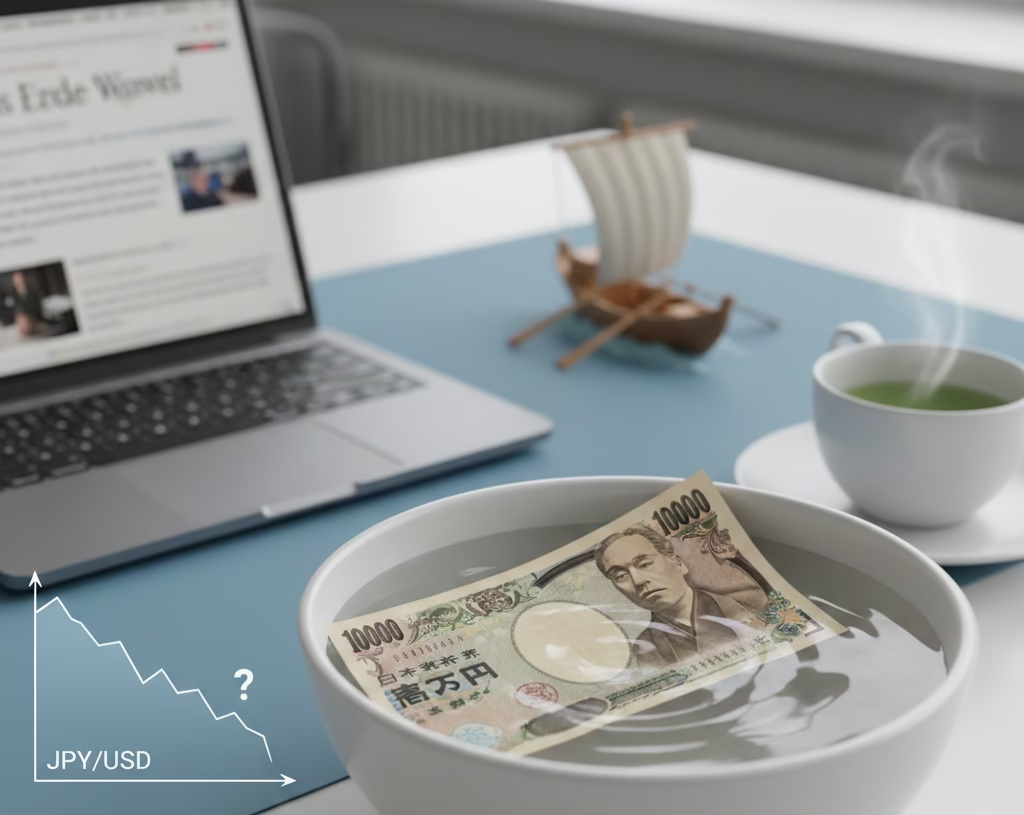
The euro is expected to feel early pressure as Asian markets open. It ended last week near $1.16 against the U.S. dollar, close to its weakest levels since late November.
The dollar’s role is more complex. On one hand, it traditionally benefits during periods of uncertainty as investors seek safety. On the other hand, Washington’s central role in escalating geopolitical tensions could undermine confidence in U.S. policy stability, limiting dollar gains.
Denmark’s currency, the krone, is also in focus. While it has weakened, analysts say this is largely due to interest rate differences rather than panic selling. The krone remains tightly managed and pegged close to the euro.
Defense Stocks and Gold Stand Out
One clear winner from rising geopolitical tension has been European defense stocks, which have jumped nearly 15% this month. Investors expect higher military spending as tensions rise in the Arctic and beyond.
Meanwhile, gold prices remain near record highs, reflecting persistent demand for safe-haven assets. Silver has also benefited as investors look for protection against political and trade shocks.
Market analysts warn that further escalation, especially if tariffs are formally implemented, could push investors deeper into defensive assets.
Europe Signals Retaliation
European leaders have made it clear they will not remain passive. Ireland’s prime minister warned that the European Union would retaliate if U.S. tariffs are imposed. French President Emmanuel Macron is reportedly considering activating the EU’s anti-coercion instrument, one of the bloc’s strongest trade defense tools.
EU ambassadors are expected to meet to discuss next steps, while some lawmakers have already called for suspending the U.S.–EU trade truce agreed just six months ago at Trump’s Turnberry resort in Scotland.
The dispute also comes at a sensitive time, as the EU has just signed a major free trade agreement with South America’s Mercosur bloc, highlighting Europe’s push to diversify trade relationships away from the U.S.
Broader Risks: More Than Just Trade
The Greenland dispute is unfolding alongside other geopolitical flashpoints. Trump has hinted at possible intervention in Iran and reignited controversy by threatening legal action against Federal Reserve Chair Jerome Powell, raising concerns about central bank independence.
According to the World Economic Forum’s latest risk survey, economic confrontation between nations is now seen as the top global risk, overtaking armed conflict.
Despite this, many investors appear desensitized. As one geopolitical strategist noted, markets have shown surprising resilience to what would once have been considered “unthinkable” developments.
What Happens Next?
Much will depend on whether Trump follows through on his tariff threat or uses it as leverage in negotiations. European unity on the Greenland issue suggests pushback will be strong, increasing the chances of a prolonged standoff.
For now, markets are likely to open the week cautiously, with modest pressure on European assets, continued strength in gold, and heightened attention on currency moves.
Analysis: What This Means for Investors
At its core, this situation is about uncertainty, not immediate damage.
Tariffs hurt markets mainly because they make planning harder for businesses. Companies don’t know how much their products will cost to sell, where to invest, or whether trade rules will change again. That uncertainty is what makes investors nervous.
This time, however, markets are calmer than in early 2025 because:
- Investors believe Trump may negotiate rather than act
- Companies are better prepared for trade disruptions
- Economic growth has remained steady so far
That said, repeated threats can wear down confidence. If tariffs actually begin in February, and especially if they rise to 25% in June, the impact would likely spread from Europe to global supply chains, corporate profits, and consumer prices.
For everyday investors, the key takeaway is this:
Short-term volatility is rising, but this is not yet a crisis.
Defense stocks and gold may continue to benefit, while export-heavy European companies and the euro could face pressure. The bigger risk would come if trade threats turn into lasting policy, something markets are watching closely.
Read also:
What Is the Federal Reserve? Meaning, Role and Why It Matters