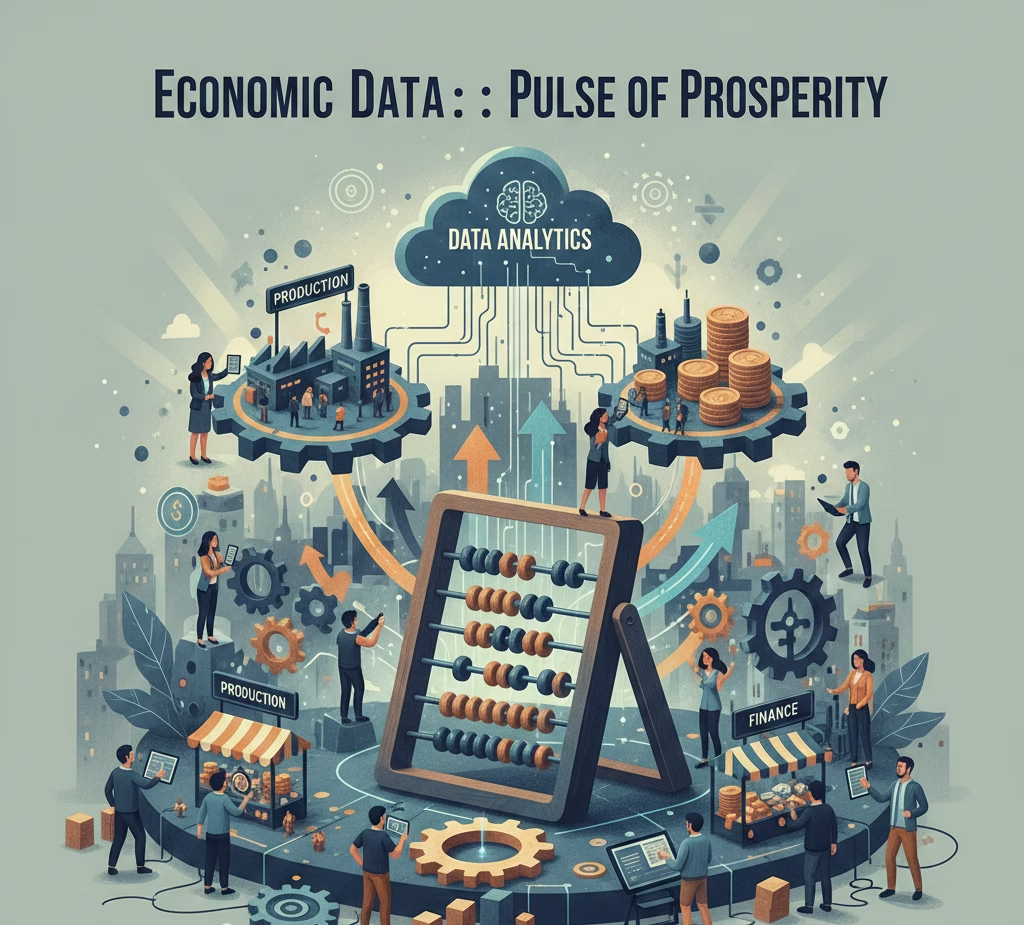
Financial markets move every day, but the reasons behind those movements are not always obvious. While company earnings, mergers, or product launches can affect individual stocks, some of the biggest and fastest market reactions come from economic data. Inflation reports, jobs numbers, and growth figures often trigger sharp moves across stocks, bonds, currencies, and commodities within minutes.
For traders and long-term investors alike, understanding economic data is essential. It helps explain why markets rise on “bad news” or fall after “good news.” More importantly, it provides context for market volatility that has nothing to do with individual companies.
This article explains what economic data is, why it matters, how markets interpret it, and how investors can use it wisely, without relying on complex financial jargon.
What Is Economic Data?
Economic data refers to official statistics that measure how an economy is performing. These figures describe broad economic activity rather than the performance of a single company or industry.
Economic data helps answer key questions such as:
- Is the economy growing or slowing?
- Are prices rising too quickly?
- Are people finding jobs easily?
- Are consumers spending or cutting back?
Governments, central banks, businesses, and investors all rely on economic data to understand the current state of the economy and to plan for the future.
Most economic data is released on a regular schedule, monthly, quarterly, or annually, making it predictable in timing but often unpredictable in outcome.
Economic Data vs Company Data
It is important to separate economic data from company-specific data.
Company data includes:
- Earnings reports
- Revenue growth
- Profit margins
- Corporate guidance
This information mainly affects individual stocks or sectors.
Economic data, on the other hand, looks at the economy as a whole. When major economic data is released, it can influence:
- Entire stock markets
- Interest rates
- Currency values
- Commodity prices
That is why economic data often leads to broad market movements rather than isolated price changes.
Types of Economic Data Markets Watch Closely
Not all economic data carries the same importance. Some reports consistently move markets more than others.
1. Growth-Related Economic Data
Growth data shows how fast an economy is expanding or contracting.
Common examples include:
- Gross Domestic Product (GDP)
- Industrial production
- Business activity surveys
GDP is one of the most widely followed economic data points. It measures the total value of goods and services produced in an economy over a specific period.
Strong growth data usually signals healthier business conditions, while weak growth data can raise concerns about slowdowns or recessions.
2. Inflation-Related Economic Data
Inflation data tracks how quickly prices are rising.
Key inflation indicators include:
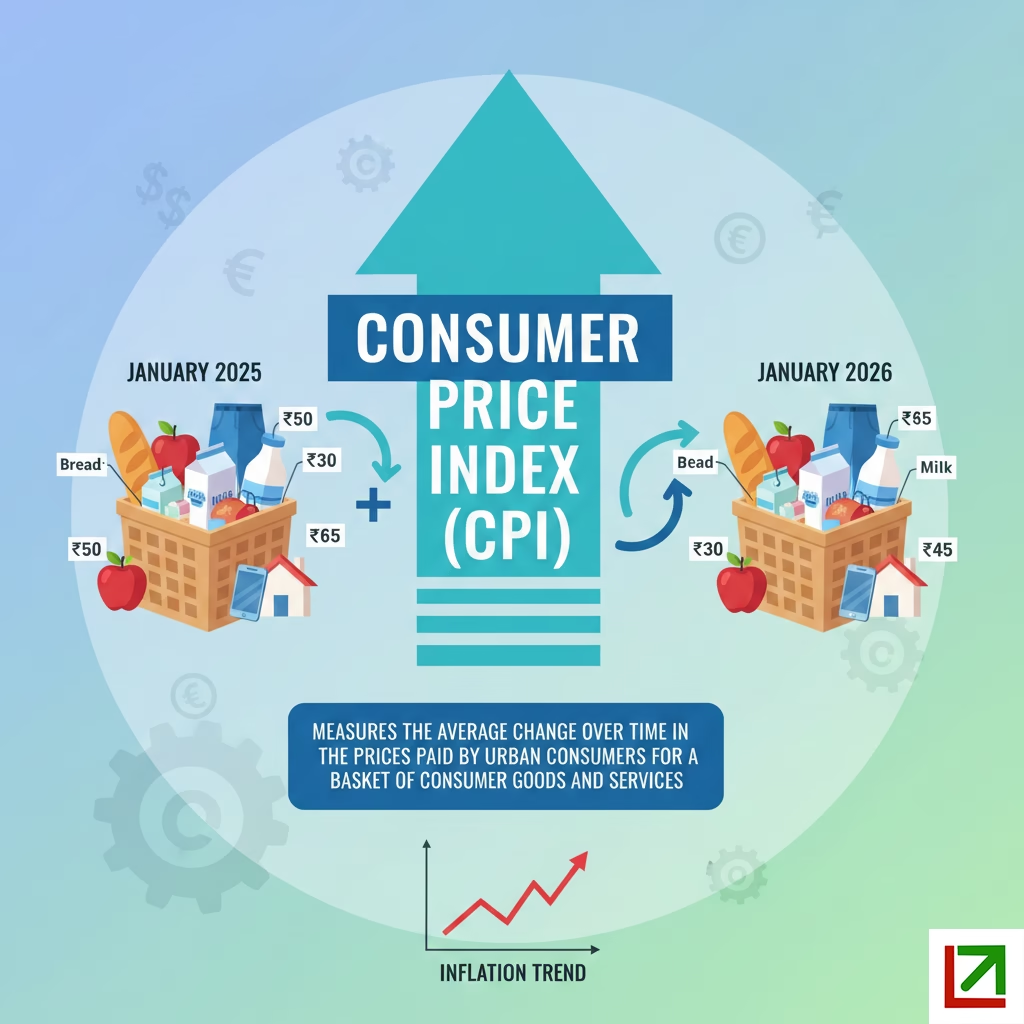
- Consumer Price Index (CPI)
- Producer Price Index (PPI)
Inflation economic data is closely watched because rising prices reduce purchasing power and influence interest rate decisions.
Markets react strongly to inflation data because it affects:
- Borrowing costs
- Investment returns
- Central bank policy
Even small surprises in inflation numbers can cause sharp market reactions.
3. Employment and Labor Market Data
Jobs data reflects the health of the labor market and consumer income.
Important labor-related economic data includes:
- Monthly jobs reports
- Unemployment rates
- Wage growth
Strong employment data suggests economic strength, but it can also increase inflation concerns if wages rise too quickly. Weak jobs data may signal economic trouble, but it can also lead to lower interest rate expectations.
This balance makes labor market data one of the most closely watched economic indicators.
4. Consumer and Income Data
Consumer activity drives a large portion of economic growth.
Key consumer-focused economic data includes:
- Personal income
- Consumer spending
- Retail sales
When income and spending rise, businesses often benefit. When consumers cut back, growth may slow.
Markets use this data to judge whether economic momentum is strengthening or fading.
5. Trade and Global Economic Data
Trade data measures economic activity across borders.
Important figures include:
- Trade balance
- Export and import levels
Trade economic data influences currency markets and can affect stock markets, especially in economies that rely heavily on exports or imports.
Why Markets React So Strongly to Economic Data
Markets do not react to economic data simply because numbers are released. They react because economic data changes expectations.
Expectations Matter More Than Headlines
Before any major economic data release, markets form expectations based on forecasts and past trends.
When the actual data:
- Matches expectations → market reaction is usually small
- Beats expectations → prices adjust upward or downward
- Misses expectations → markets often move sharply
The surprise factor matters more than whether the number looks good or bad on the surface.
For example, strong economic data can sometimes push markets lower if it increases fears of higher interest rates.
Economic Data and Interest Rates
One of the biggest reasons markets react to economic data is its influence on interest rates.
Central banks use economic data to decide:
- Whether to raise rates
- Cut rates
- Or keep rates unchanged
Interest rates affect:
- Loan costs
- Business investment
- Stock valuations
- Currency strength
Because interest rates impact nearly every financial asset, markets react quickly when economic data changes expectations about future policy decisions.
Broad Market Impact
Unlike company news, economic data can affect multiple markets at once, including:
- Stock indexes
- Government bonds
- Currencies
- Commodities
This wide reach explains why economic data releases often cause fast and widespread price movements.
How Traders Use Economic Data
Short-term traders focus heavily on economic data releases.
They pay close attention to:
- Release dates and times
- Market expectations
- Immediate price reactions
Economic data releases often increase volatility, creating both opportunity and risk. Traders may position themselves before the release or react quickly once the data is published.
However, trading around economic data can be risky due to sudden price swings and unpredictable market responses.
How Long-Term Investors Use Economic Data
Long-term investors use economic data differently.
Rather than reacting to single reports, they focus on:
- Long-term trends
- Economic cycles
- Policy direction
For investors, one month of data rarely changes a long-term strategy. What matters more is whether economic data consistently points toward expansion, slowdown, or stability over time.
Economic data helps investors:
- Adjust portfolio allocation
- Understand market risks
- Set realistic expectations
The Role of Economic Calendars
Because most economic data is released on a set schedule, many investors use economic calendars.
These calendars list:
- Upcoming data releases
- Release times
- Expected values
Knowing when key economic data is due helps investors prepare for potential volatility and avoid being surprised by sudden market moves.
Limitations of Economic Data
While economic data is valuable, it is not perfect.
Data Revisions
Many economic reports are revised after their initial release. Early estimates may later be adjusted as more information becomes available.
This means markets sometimes react to data that does not fully reflect economic reality.
Conflicting Signals
Different economic data points can send mixed messages.
For example:
- Strong job growth
- Slowing consumer spending
Markets must constantly balance these signals, which can lead to uncertainty and volatility.
Overreaction Risk
Short-term market reactions can exaggerate the importance of a single economic data release.
Understanding the broader context helps investors avoid emotional decisions based on short-term noise.
How Economic Data Shapes Market Sentiment
Economic data influences not only prices but also market psychology.
Positive trends can:
- Boost confidence
- Encourage risk-taking
Negative trends can:
- Increase caution
- Drive investors toward safer assets
Over time, economic data helps shape narratives about growth, risk, and opportunity.
Economic Data in a Globalized World
In today’s global economy, economic data from one country can affect markets worldwide.
For example:
- Inflation data in the U.S. can move global stock markets
- Growth data in major economies can impact commodities
- Trade data can affect currencies across regions
This interconnectedness makes economic data more important than ever.
Using Economic Data Wisely
To use economic data effectively:
- Focus on trends, not single reports
- Understand expectations before reacting
- Combine data with broader analysis
Economic data works best when used as part of a bigger picture rather than as a standalone signal.
Conclusion
Economic data plays a central role in financial markets. It provides insight into growth, inflation, employment, and consumer behavior, shaping expectations across entire economies.
Markets react strongly to economic data because it influences interest rates, policy decisions, and future growth outlooks. While short-term reactions can be unpredictable, understanding economic data helps investors make sense of market volatility and avoid emotional decisions.
By learning how economic data works and why markets respond to it, traders and investors can better navigate uncertainty, separate meaningful signals from noise, and make more informed financial decisions.
In a world driven by information, economic data remains one of the most powerful forces shaping global markets.
Other topics you might be interested in:
What Is the Federal Reserve? Meaning, Role and Why It Matters
What Is Inflation? Meaning, Causes and How It Affects Consumers
What Are Interest Rates and Why They Matter to the Economy?
Top Blockchain Platforms and Payment Startups to Watch in 2026